AI Researchers Aim to Crack Code on ‘Sun Energy’

AI Researchers Aim to Crack Code on ‘Sun Energy’

  • March 6, 2018
Table of Contents

AI Researchers Aim to Crack Code on ‘Sun Energy’

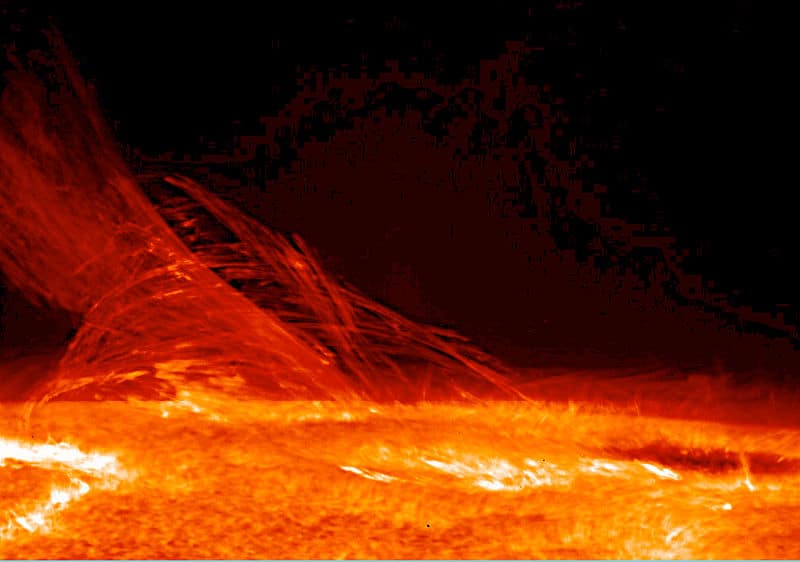
Since the ’50s, scientists have chased the promise of clean energy from sun-like reactions between deuterium and tritium, the plentiful isotopes of hydrogen. This carbon-free energy, achieved at temperatures of 360 million degrees Fahrenheit, would offer a great way to heat water and, in turn, spin turbines to create countless kilowatts of electricity.

Source: nvidia.com
Share :
comments powered by Disqus

Related Posts

Is it time to take the Hyperloop seriously?

Is it time to take the Hyperloop seriously?

Imagine traveling the length of the United Kingdom—from London to Edinburgh, 400-plus miles—in under an hour. A journey from Los Angeles to San Francisco would take less than 30 minutes (five hours less than the average drive between the two cities). Your journey would be safe and comfortable, your carbon footprint almost non-existent.

Read More
So what’s new in AI?

So what’s new in AI?

I graduated with a degree in AI when the cost of the equivalent computational power to an iPhone was $50 million. A lot has changed but surprisingly much is still the same.

Read More
A Preview of Bristlecone, Google’s New Quantum Processor

A Preview of Bristlecone, Google’s New Quantum Processor

The goal of the Google Quantum AI lab is to build a quantum computer that can be used to solve real-world problems. Our strategy is to explore near-term applications using systems that are forward compatible to a large-scale universal error-corrected quantum computer. In order for a quantum processor to be able to run algorithms beyond the scope of classical simulations, it requires not only a large number of qubits.

Read More