Jeff Bezos Has Spent $42M Building a Clock to Run 10,000 Years
Table of Contents
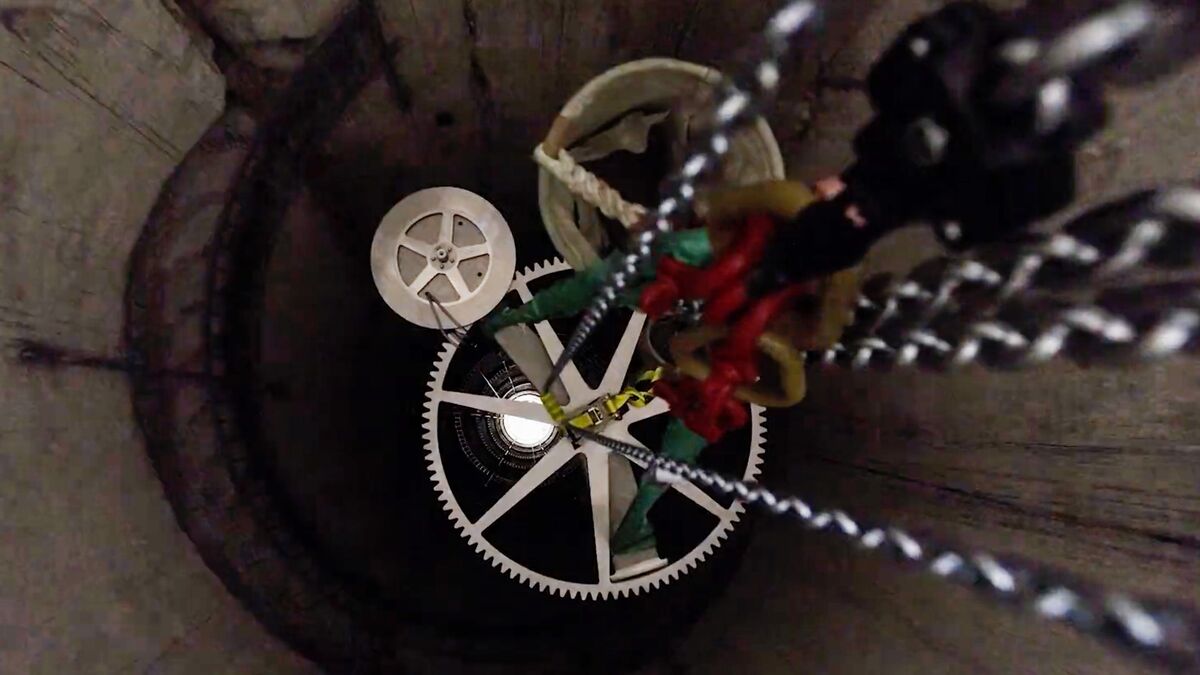
The heart of the clock is a titanium torsion pendulum that beats once every 10 seconds. The falling weight that powers the clock can be wound by hand, but it is kept wound by solar power: sunlight shines into an aperture in the 500-ft.-deep chamber in which the clock sits, striking an air-filled cylinder. The expansion of the cylinder provides enough energy to lift the falling weight slightly, and also provides a solar noon time reference for correcting the clock.
I just said that this is a grandfather clock on steroids, but really it’s more of an Atmos clock on steroids and I wonder if the Atmos might not have partially influenced the design for the Clock Of The Long Now, as two key features of the Atmos are its very slow beat (one second) torsion pendulum, and the fact that it’s kept wound by changes in temperature. And of course, there is the fact that the Atmos will keep running without human intervention, which is an essential feature for the Clock Of The Long Now.
Source: bloomberg.com