A Virtual Slug Simulator Could Help Researchers Develop Better AI

A Virtual Slug Simulator Could Help Researchers Develop Better AI

  • March 7, 2018
Table of Contents

A Virtual Slug Simulator Could Help Researchers Develop Better AI

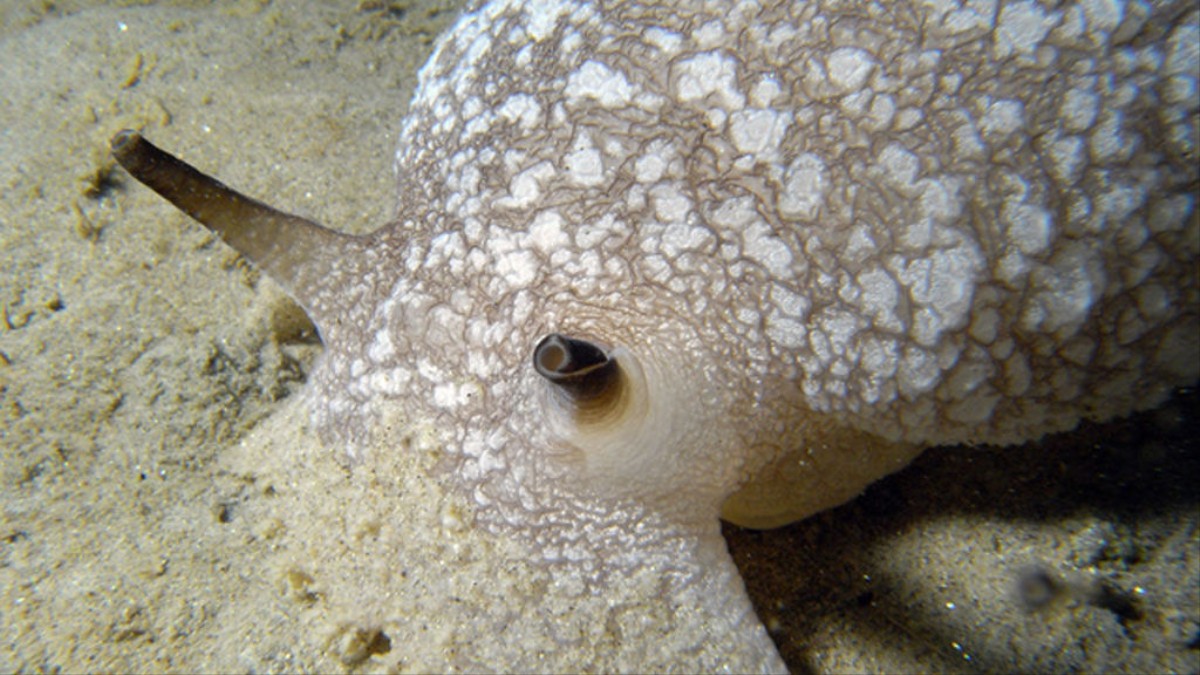
Researchers at the University of Illinois College of Medicine at Urbana-Champaign developed Cyberslug, a simulation of the sea slug, to better understand how simple brains work and apply that knowledge to the broader field of artificial intelligence research. Their study, “Implementing Goal-Directed Foraging Decisions of a Simpler Nervous System in Simulation,” is published in the journal eNeuro.

Source: vice.com

Share :
comments powered by Disqus

Related Posts

Bonsai AI: Using Simulink for Deep Reinforcement Learning

Bonsai AI: Using Simulink for Deep Reinforcement Learning

Simulink provides a great training environment for DRL as it allows 3rd parties like Bonsai to integrate and control simulation models from the outside. This ability is one of the basic requirements for simulation platforms to be feasible for Deep Reinforcement Learning using Bonsai AI. More requirements can be found here.

Read More
The Birth of A.I.

The Birth of A.I.

Waze famously disrupted GPS navigation by crowdsourcing user data from mobile phones, instead of purchasing costly sensors tied to city infrastructure, as Nokia had done before them. Waze then scaled with low overhead costs by using machine learning algorithms to find precise traffic patterns that optimized each user’s route. The end result of this dynamic was massive layoffs at Nokia, and Google’s acquisition of / integration with Waze in 2013.

Read More
So what’s new in AI?

So what’s new in AI?

I graduated with a degree in AI when the cost of the equivalent computational power to an iPhone was $50 million. A lot has changed but surprisingly much is still the same.

Read More