An inside look at how Sweden is building the world’s second-longest tunnel

An inside look at how Sweden is building the world’s second-longest tunnel

  • March 10, 2018
Table of Contents

An inside look at how Sweden is building the world’s second-longest tunnel

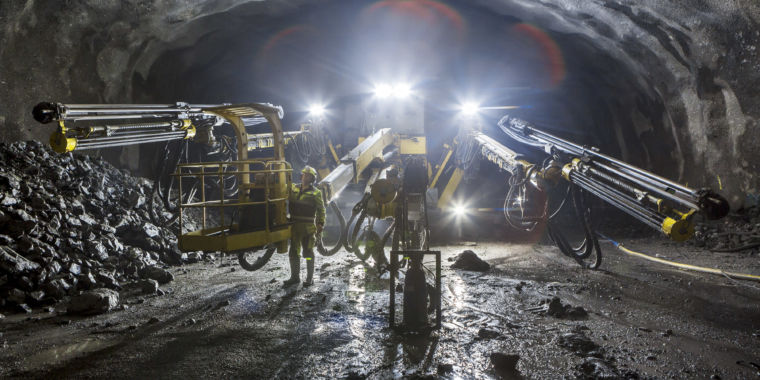
The solution settled upon involves taking nothing less than 18km (11 miles-plus) of the bypass underground, with twin tunnels running three lanes abreast in each direction. Comprised of three tunnel sections in total, the winning design means that the E4 bypass avoids six nature reserves or places of cultural significance, including grounds of Drottningholm Palace—a UNESCO world heritage site on the island of Lovö—and the need for bridges over the crystal waters of the Mälaren strait. Not for nothing either, E4 will be one of the largest underground highways in the world, with its longest tunnel section spanning 16km (nearly 10 miles) from the bypass’ southernmost point.

At its deepest, the highway will bottom out at 80m (close to 90 yards) below the surface of the Mälaren.

Source: arstechnica.com
Tags :
Share :
comments powered by Disqus

Related Posts

Vision-improving nanoparticle eyedrops could end the need for glasses

Vision-improving nanoparticle eyedrops could end the need for glasses

Could the development of eyesight-improving eyedrops help eliminate the need for glasses? Quite possibly, suggests new research coming out of Israel’s Shaare Zedek Medical Center and Bar-Ilan University. A team of ophthalmologists at these institutes have invented and tested “nanodrops” which, combined with a laser process, reportedly results in improvements in both short- and long-sightedness.

Read More
Automatic Machine Knitting of 3D Meshes

Automatic Machine Knitting of 3D Meshes

We present the first computational approach that can transform 3D meshes, created by traditional modeling programs, directly into instructions for a computer-controlled knitting machine. Knitting machines are able to robustly and repeatably form knitted 3D surfaces from yarn, but have many constraints on what they can fabricate.

Read More