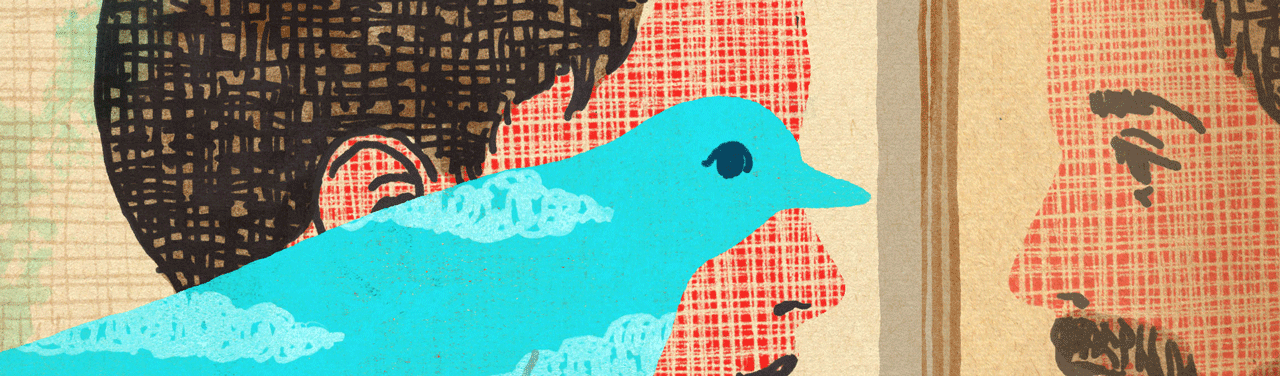
Studying how the brain relinquishes childhood memories

Studying how the brain relinquishes childhood memories

  • March 12, 2018
Table of Contents

Studying how the brain relinquishes childhood memories

We called them fairy rocks. They were just colorful specks of gravel—the kind you might buy for a fish tank—mixed into my preschool’s playground sand pit. But my classmates and I endowed them with magical properties, hunted them like treasure, and carefully sorted them into piles of sapphire, emerald, and ruby.

Sifting the sand for those mystical gems is one of my earliest memories. I was no older than 3 at the time. My memory of kindergarten has likewise been reduced to isolated moments: tracing letters on tan paper with pink dashed lines; watching a movie about ocean creatures; my teacher slicing up a giant roll of parchment so we could all finger-paint self-portraits.

Source: nautil.us

Share :
comments powered by Disqus

Related Posts

The forgetting curve explains why humans struggle to memorize

The forgetting curve explains why humans struggle to memorize

Learning has an evolutionary purpose: Among species, individuals that adapt to their environments will succeed. That’s why your brain more easily retains important or surprising information: It takes very little effort to remember that the neighbor’s dog likes to bite. Remembering the dog’s name is harder.

Read More
The Bayesian Probability Puzzle Solution

The Bayesian Probability Puzzle Solution

When making hard decisions, do you go with your gut or try to calculate the risks? In many cases going with your gut is fine, but the answers to our February puzzle problems show how explicit probabilistic thinking can outperform intuitive estimates. They also highlight the differences between situations where an intuitive approach succeeds and ones where it fails.

Read More
Hacking the Brain with Adversarial Images

Hacking the Brain with Adversarial Images

This is an example of what’s called an adversarial image: an image specifically designed to fool neural networks into making an incorrect determination about what they’re looking at. Researchers at Google Brain decided to try and figure out whether the same techniques that fool artificial neural networks can also fool the biological neural networks inside of our heads, by developing adversarial images capable of making both computers and humans think that they’re looking at something they aren’t.

Read More