PyTorch – Internal Architecture Tour

PyTorch – Internal Architecture Tour

  • March 13, 2018
Table of Contents

PyTorch – Internal Architecture Tour

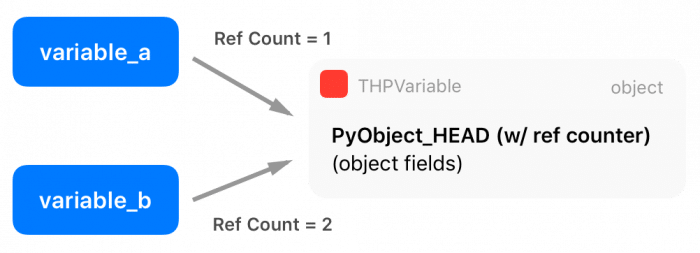
This post is a tour around the PyTorch codebase, it is meant to be a guide for the architectural design of PyTorch and its internals. My main goal is to provide something useful for those who are interested in understanding what happens beyond the user-facing API and show something new beyond what was already covered in other tutorials.

Source: christianperone.com

Share :
comments powered by Disqus

Related Posts

The Birth of A.I.

The Birth of A.I.

Waze famously disrupted GPS navigation by crowdsourcing user data from mobile phones, instead of purchasing costly sensors tied to city infrastructure, as Nokia had done before them. Waze then scaled with low overhead costs by using machine learning algorithms to find precise traffic patterns that optimized each user’s route. The end result of this dynamic was massive layoffs at Nokia, and Google’s acquisition of / integration with Waze in 2013.

Read More
Semantic Image Segmentation with DeepLab in Tensorflow

Semantic Image Segmentation with DeepLab in Tensorflow

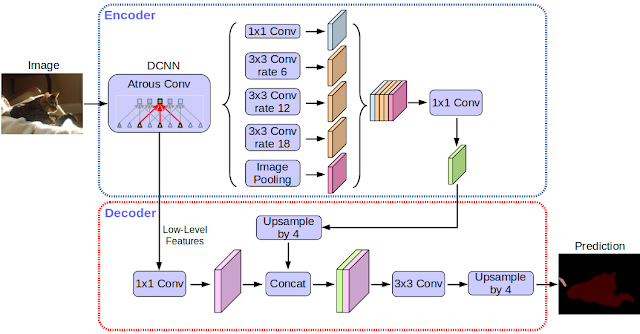
Today, we are excited to announce the open source release of our latest and best performing semantic image segmentation model, DeepLab-v3+ [1], implemented in Tensorflow. This release includes DeepLab-v3+ models built on top of a powerful convolutional neural network (CNN) backbone architecture [2, 3] for the most accurate results, intended for server-side deployment. As part of this release, we are additionally sharing our Tensorflow model training and evaluation code, as well as models already pre-trained on the Pascal VOC 2012 and Cityscapes benchmark semantic segmentation tasks.

Read More
Google helps Pentagon analyze military drone footage—employees “outraged”

Google helps Pentagon analyze military drone footage—employees “outraged”

A report from Gizmodo says that Google is partnering with the United States Department of Defense and building drone software. The project will reportedly apply Google’s usual machine learning prowess to identify objects in drone footage. Google’s involvement in the project wasn’t public, but it was apparently discussed internally at Google last week and leaked.

Read More