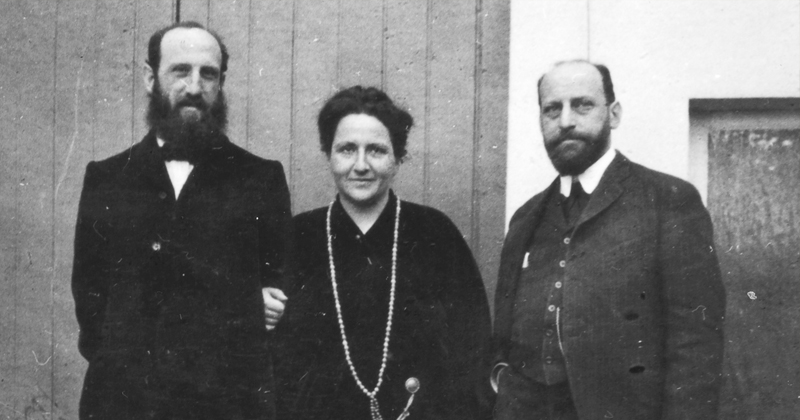
How Leo and Gertrude Stein Revolutionized the Art World

How Leo and Gertrude Stein Revolutionized the Art World

  • March 15, 2018
Table of Contents

How Leo and Gertrude Stein Revolutionized the Art World

If Picasso and Matisse were rivals from almost the first moment each knew of the other’s existence, the contest was driven as much by those cheering from the sidelines as by their own considerable egos. It was Montmartre versus the Latin Quarter, the bande à Picasso versusthe Fauves, the dark voodoo of the Spaniard versus the Apollonian grace of the Frenchman. For the most part the competition was respectful, but it could occasionally devolve into childish stunts.

Shortly after the exhibition of Joy of Life, a few members of Picasso’s gang went around Montmartre altering posters warning of the dangers of lead paint to read “‘Painters stay away from Matisse!’ . . . ‘Matisse drives you mad!’” And while Matisse generally tried to rise above the fray, on more than one occasion he was overheard making disparaging remarks about Picasso’s art that found their way into the newspapers.

Source: lithub.com
Share :
comments powered by Disqus

Related Posts

Did plants cause one of Earth’s great extinctions?

Did plants cause one of Earth’s great extinctions?

Clues are hard to come by when you’re trying to look back to a time when the continents clumped together like a closed fist. But geologists have found evidence that plants, the most gentle of organisms, may have helped kill most of the life in the oceans 374 million years ago.

Read More
New study tracks the evolution of stone tools

New study tracks the evolution of stone tools

For at least 2.6 million years, humans and our ancestors have been making stone tools by chipping off flakes of material to produce sharp edges. We think of stone tools as very rudimentary technology, but producing a usable tool without wasting a lot of stone takes skill and knowledge. That’s why archaeologists tend to use the complexity of stone tools as a way to measure the cognitive skills of early humans and the complexity of their cultures and social interactions.

Read More