Computer-based personality judgments are more accurate than those made by humans

Computer-based personality judgments are more accurate than those made by humans

  • March 18, 2018
Table of Contents

Computer-based personality judgments are more accurate than those made by humans

This study compares the accuracy of personality judgment—a ubiquitous and important social-cognitive activity—between computer models and humans. Using several criteria, we show that computers’ judgments of people’s personalities based on their digital footprints are more accurate and valid than judgments made by their close others or acquaintances (friends, family, spouse, colleagues, etc.). Our findings highlight that people’s personalities can be predicted automatically and without involving human social-cognitive skills.

Source: pnas.org
Tags :
Share :
comments powered by Disqus

Related Posts

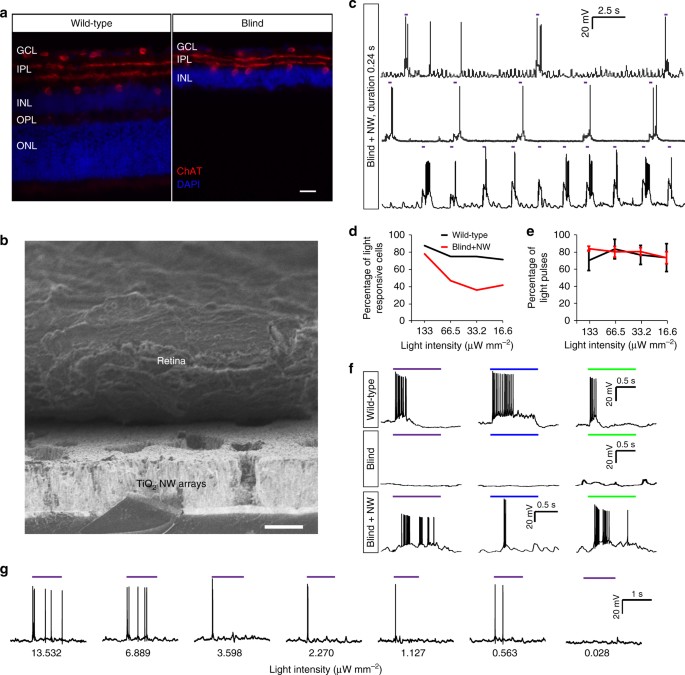
Nanowire arrays restore vision in blind mice

Nanowire arrays restore vision in blind mice

Retina is an important light-sensitive tissue that transduces light information into neural activities through multi-layers of neuronal cells. Light entering an eye passes through the transparent retina and is mostly captured by the visual pigment-containing photoreceptors. Retinal degenerative diseases such as retinitis pigmentosa and macular degeneration lead to irreversible damage or even loss of photoreceptors, which can result in serious impairment of vision and eventually blindness.

Read More
Reptile: A Scalable Meta-Learning Algorithm

Reptile: A Scalable Meta-Learning Algorithm

We’ve developed a simple meta-learning algorithm called Reptile which works by repeatedly sampling a task, performing stochastic gradient descent on it, and updating the initial parameters towards the final parameters learned on that task. This method performs as well as MAML, a broadly applicable meta-learning algorithm, while being simpler to implement and more computationally efficient.

Read More