These Geometric Shapes Were Made By a Previously Unknown Civilization

These Geometric Shapes Were Made By a Previously Unknown Civilization

  • March 29, 2018
Table of Contents

These Geometric Shapes Were Made By a Previously Unknown Civilization

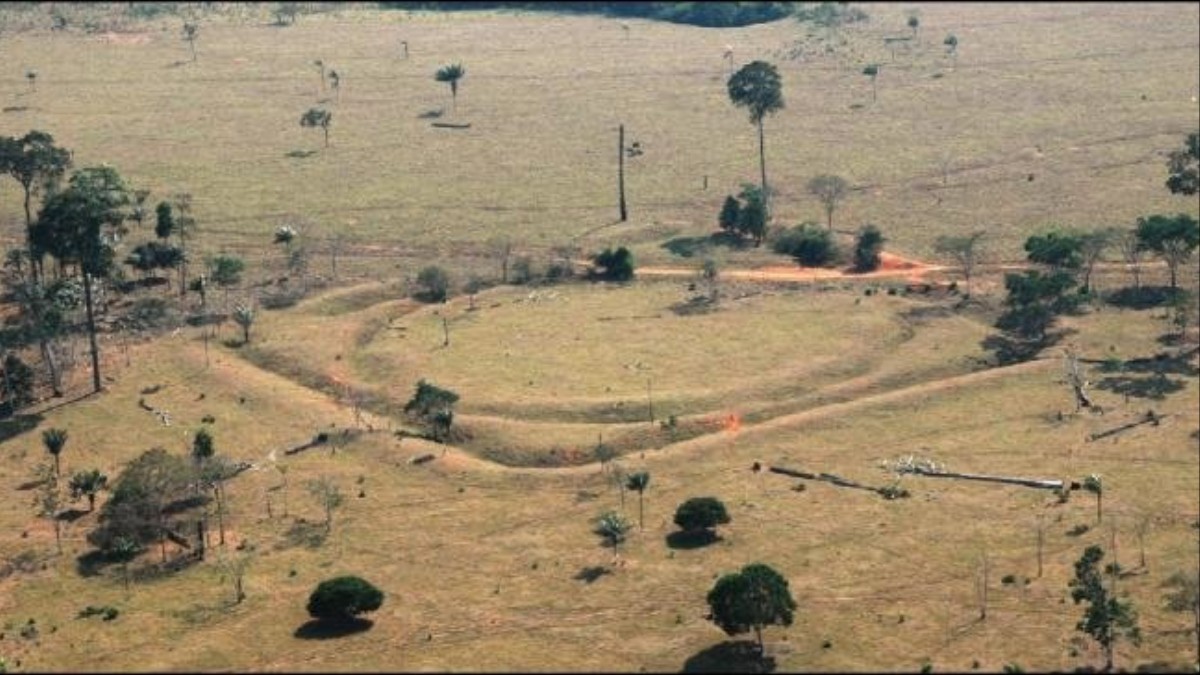
Now, a team of archaeologists and satellite imagery specialists have discovered the remains of a previously unknown civilization that flourished around 1250 to 1500 AD, just before the European colonization of the Americas. The find, which includes captivating images of geometric earthworks, is described in a paper published Tuesday in Nature Communications, led by University of Exeter archaeologist Jonas Gregorio de Souza.

Source: vice.com
Tags :
Share :
comments powered by Disqus

Related Posts

Five new ancient genomes tell us about Neanderthal tribes

Five new ancient genomes tell us about Neanderthal tribes

The researchers, led by Mateja Hajdinjak at the Max Planck Institute for Evolutionary Anthropology, extracted tiny amounts of bone or tooth powder—sometimes as little as 9mg—and used a chemical process to remove modern genetic contamination. They also checked for the telltale signs of degradation found in ancient DNA.

Read More
The shape of life

The shape of life

Last spring, the geobiologist Dominic Papineau and colleagues reported that fossilised microorganisms were identified in 3.77-4.28-billion-year-old iron-rich rock in Quebec: hematite tubes and filaments whose appearance is similar to microorganisms that today live in hydrothermal vents. Others dismissed their findings as ‘dubiofossils’, a term the geologist Hans Hofmann coined in 1972 to describe controversial fossils. ‘Fossils,’ Hofmann wrote, were proven biological; ‘pseudofossils’ resembled life but were inorganic; ‘dubiofossils’ (also known as Problematica or Miscellanea) were equivocal.

Read More
Ancient DNA Is Rewriting Human and Neanderthal History

Ancient DNA Is Rewriting Human and Neanderthal History

Geneticist David Reich used to study the living, but now he studies the dead. The precipitating event came in the form of 40,000-year-old Neanderthal bones found in a Croatian cave. So well-preserved were the bones that they yielded enough DNA for sequencing, and it became Reich’s job in 2007 to analyze the DNA for signs that Neanderthals interbred with humans—a idea he was “deeply suspicious” of at the time.

Read More