Teaching machines to spot essential information in physical systems

Teaching machines to spot essential information in physical systems

  • March 31, 2018
Table of Contents

Teaching machines to spot essential information in physical systems

Two physicists at ETH Zurich and the Hebrew University of Jerusalem have developed a novel machine-learning algorithm that analyses large data sets describing a physical system and extract from them the essential information needed to understand the underlying physics.

Source: phys.org

Share :
comments powered by Disqus

Related Posts

Expressive Speech Synthesis with Tacotron

Expressive Speech Synthesis with Tacotron

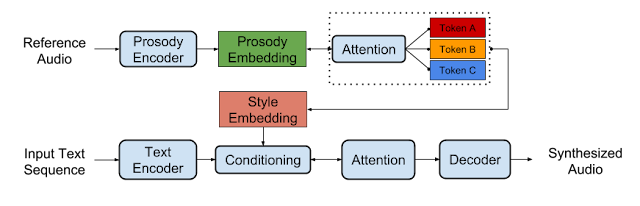
At Google, we’re excited about the recent rapid progress of neural network-based text-to-speech (TTS) research. In particular, end-to-end architectures, such as the Tacotron systems we announced last year, can both simplify voice building pipelines and produce natural-sounding speech. This will help us build better human-computer interfaces, like conversational assistants, audiobook narration, news readers, or voice design software.

Read More
Does my algorithm have a mental-health problem?

Does my algorithm have a mental-health problem?

Is my car hallucinating? Is the algorithm that runs the police surveillance system in my city paranoid? Marvin the android in Douglas Adams’s Hitchhikers Guide to the Galaxy had a pain in all the diodes down his left-hand side.

Read More
AWS Public Datasets

AWS Public Datasets

AWS hosts a variety of public datasets that anyone can access for free. Previously, large datasets such as satellite imagery or genomic data have required hours or days to locate, download, customize, and analyze. When data is made publicly available on AWS, anyone can analyze any volume of data without needing to download or store it themselves.

Read More