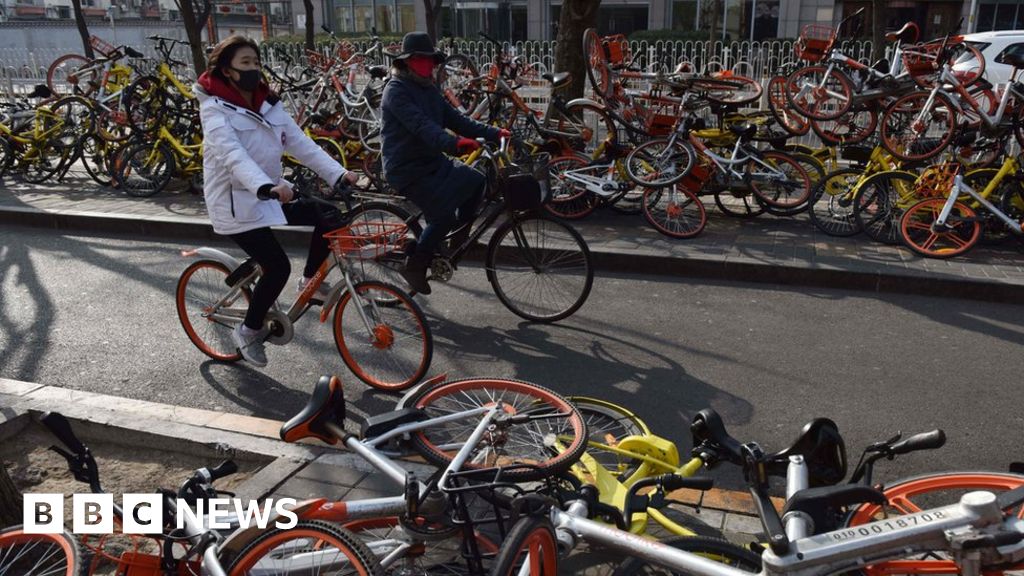
Who really came up with China’s ‘four new inventions’?
Table of Contents
China claims it invented high-speed rail, mobile payments, e-commerce and bike-sharing, but did it?
Source: bbc.com
China claims it invented high-speed rail, mobile payments, e-commerce and bike-sharing, but did it?
Source: bbc.com

IBM continued to lay off workers as discreetly as possible in 2017, reporting on them in employment news roundups on occasion. But sadly, for me, it became a little bit old news (not, of course, for those newly affected). IBM repeatedly cuts older workers and U.S. jobs, according to those laid off, and denies it.
Read More
A 2009 poll in eight east European countries asked if the economic situation for ordinary people was ‘better, worse or about the same as it was under communism’. The results stunned observers: 72per cent of Hungarians, and 62per cent of both Ukrainians and Bulgarians believed that most people were worse off after 1989. In no country did more than 47per cent of those surveyed agree that their lives improved after the advent of free markets.
Read More
This report examines the intersection of two subjects, China and artificial intelligence, both of which are already difficult enough to comprehend on their own. It provides context for China’s AI strategy with respect to past science and technology plans, and it also connects the consistent and new features of China’s AI approach to the drivers of AI development (e.g. hardware, data, and talented scientists). In addition, it benchmarks China’s current AI capabilities by developing a novel index to measure any country’s AI potential and highlights the potential implications of China’s AI dream for issues of AI safety, national security, economic development, and social governance.
Read More