Depthwise separable convolutions for machine learning

Depthwise separable convolutions for machine learning

  • April 12, 2018
Table of Contents

Depthwise separable convolutions for machine learning

Convolutions are an important tool in modern deep neural networks (DNNs). This post is going to discuss some common types of convolutions, specifically regular and depthwise separable convolutions. My focus will be on the implementation of these operation, showing from-scratch Numpy-based code to compute them and diagrams that explain how things work.

Source: thegreenplace.net
Tags :
Share :
comments powered by Disqus

Related Posts

DeepMarks: A Digital Fingerprinting Framework for Deep Neural Networks

DeepMarks: A Digital Fingerprinting Framework for Deep Neural Networks

DeepMarks introduces the first fingerprinting methodology that enables the model owner to embed unique fingerprints within the parameters (weights) of her model and later identify undesired usages of her distributed models. The proposed framework embeds the fingerprints in the Probability Density Function (pdf) of trainable weights by leveraging the extra capacity available in contemporary DL models. DeepMarks is robust against fingerprints collusion as well as network transformation attacks, including model compression and model fine-tuning.

Read More
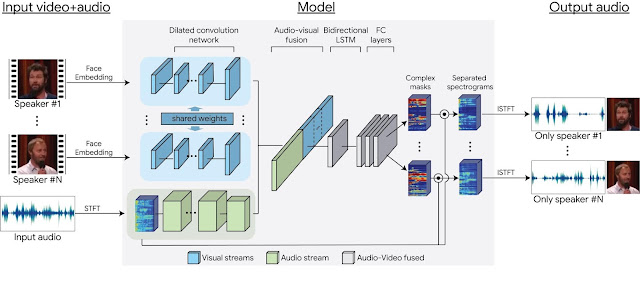
Looking to Listen: Audio-Visual Speech Separation

Looking to Listen: Audio-Visual Speech Separation

People are remarkably good at focusing their attention on a particular person in a noisy environment, mentally “muting” all other voices and sounds. Known as the cocktail party effect, this capability comes natural to us humans. However, automatic speech separation — separating an audio signal into its individual speech sources — while a well-studied problem, remains a significant challenge for computers.

Read More