Looking to Listen: Audio-Visual Speech Separation

Looking to Listen: Audio-Visual Speech Separation

  • April 12, 2018
Table of Contents

Looking to Listen: Audio-Visual Speech Separation

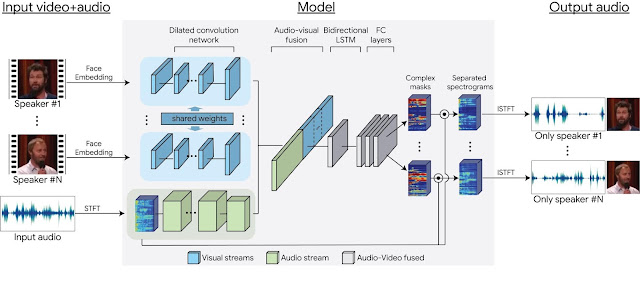
People are remarkably good at focusing their attention on a particular person in a noisy environment, mentally “muting” all other voices and sounds. Known as the cocktail party effect, this capability comes natural to us humans. However, automatic speech separation — separating an audio signal into its individual speech sources — while a well-studied problem, remains a significant challenge for computers.

Source: googleblog.com

Tags :
Share :
comments powered by Disqus

Related Posts

Lessons Learned Reproducing a Deep Reinforcement Learning Paper

Lessons Learned Reproducing a Deep Reinforcement Learning Paper

There are a lot of neat things going on in deep reinforcement learning. One of the coolest things from last year was OpenAI and DeepMind’s work on training an agent using feedback from a human rather than a classical reward signal. There’s a great blog post about it at Learning from Human Preferences, and the original paper is at Deep Reinforcement Learning from Human Preferences.

Read More
AlterEgo: Interfacing with devices through silent speech

AlterEgo: Interfacing with devices through silent speech

AlterEgo is a closed-loop, non-invasive, wearable system that allows humans to converse in high-bandwidth natural language with machines, artificial intelligence assistants, services, and other people without any voice—without opening their mouth, and without any discernible movements—simply by vocalizing internally.

Read More