Interactive computational neuroscience – part 1, spiking neurons

Interactive computational neuroscience – part 1, spiking neurons

  • April 17, 2018
Table of Contents

Interactive computational neuroscience – part 1, spiking neurons

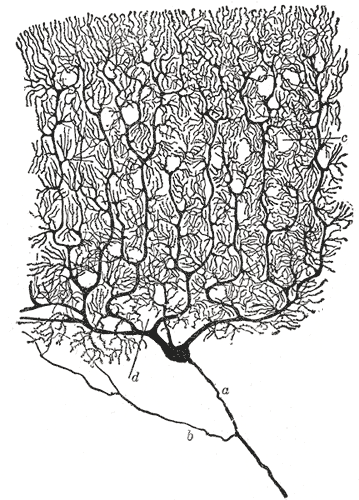
Neurons are cells — small bodies of mostly water, ions, amino acids and proteins with remarkable electrochemical properties. They are the primary functional units of the brain. Our mental experiences — our perceptions, memories, and thoughts — are the result of the ebb and flow of salts across neural bi-lipid membranes and the synaptic transmissions between neurons.

Understanding neurons and neural computation can help illuminate how our rich mental experiences are constructed and represented, the underlying principles of our behavior and decision making, as well as provide biological inspiration for new ways to process information and for artificial intelligence.

Source: jackterwilliger.com

Tags :
Share :
comments powered by Disqus

Related Posts

Brainless Embryos Suggest Bioelectricity Guides Growth

Brainless Embryos Suggest Bioelectricity Guides Growth

In recent years, by working on tadpoles and other simple creatures, Levin’s laboratory has amassed evidence that the embryo is molded by bioelectrical signals, particularly ones that emanate from the young brain long before it is even a functional organ. Those results, if replicated in other organisms, may change our understanding of the roles of electrical phenomena and the nervous system in development, and perhaps more widely in biology.

Read More
The Surprising Relativism of the Brain’s GPS

The Surprising Relativism of the Brain’s GPS

Physics grappled with the question of whether space is absolute or relative for centuries, before deciding in favor of relativity. But, it is only in recent years that the brain sciences have begun to discuss a parallel set of questions. For many years now, absolute space has ruled neuroscience.

Read More