Why Nuclear Clocks Will Be the Most Accurate Clocks on Earth

Why Nuclear Clocks Will Be the Most Accurate Clocks on Earth

  • April 19, 2018
Table of Contents

Why Nuclear Clocks Will Be the Most Accurate Clocks on Earth

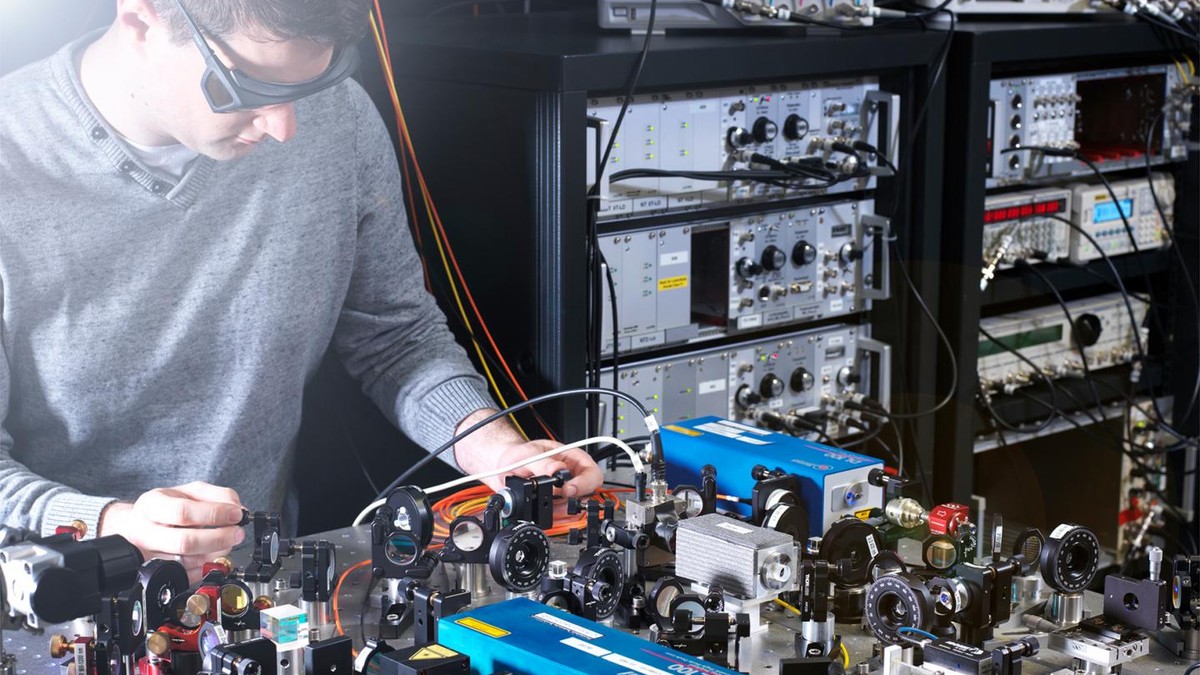
Since they were first created in the mid-twentieth century, atomic clocks have been the gold standard of timekeeping. Indeed, the most accurate clock in the world, which is run by the National Institute of Standards and Technology in Colorado, is a ytterbium atomic clock. But now researchers around the world are working on building a better model based not on the electrons of an atom, but the nucleus.

Source: vice.com

Share :
comments powered by Disqus

Related Posts

Dark Matter Is in Our DNA

Dark Matter Is in Our DNA

While some point to galaxy cluster work by Fritz Zwicky in the 1930s, dark matter was truly “discovered” in the 1970s by Vera Rubin, who was studying the rotation of spiral galaxies. Rubin found that galaxies were spinning too fast for the matter we could see in them, yet they weren’t flying apart. Rubin’s work left astronomers with a choice: Either our laws of gravity were wrong, or there was something else out there pulling on the galaxy’s stars and speeding them up while keeping them together.

Read More
DARPA Is Funding Time Crystal Research

DARPA Is Funding Time Crystal Research

You probably scratched your head last year if you read about time crystals, likely 2017’s most esoteric, widely covered popular science story. Even if you understood how they worked, you might not have known what use they could have. Time crystals, systems of atoms that maintain a periodic ticking behavior in the presence of an added electromagnetic pulse, have now piqued the interest of one well-funded government agency: the Department of Defense.

Read More