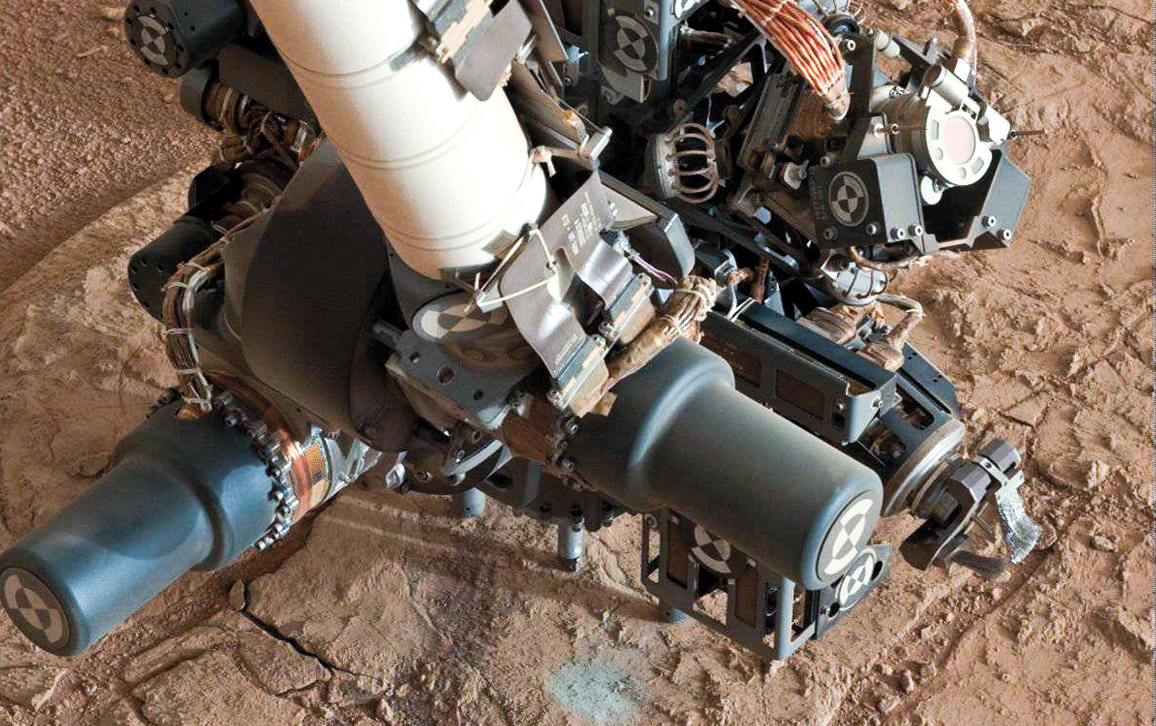
Drilling with Curiosity
Table of Contents
Remotely operating a rover on another planet so that it can gather and analyze samples requires extensive planning, failure work-arounds, and compromise.
Source: americanscientist.org
Remotely operating a rover on another planet so that it can gather and analyze samples requires extensive planning, failure work-arounds, and compromise.
Source: americanscientist.org
Measurements made by the European Space Agency’s Planck satellite, which maps the cosmic microwave background, predicted that the Hubble constant value should now be 67 kilometers per second per megaparsec (3.3 million light-years), and could be no higher than 69 kilometers per second per megaparsec. This means that for every 3.3 million light-years farther away a galaxy is from us, it is moving 67 kilometers per second faster. But Riess’s team measured a value of 73 kilometers per second per megaparsec, indicating galaxies are moving at a faster rate than implied by observations of the early universe.
Read More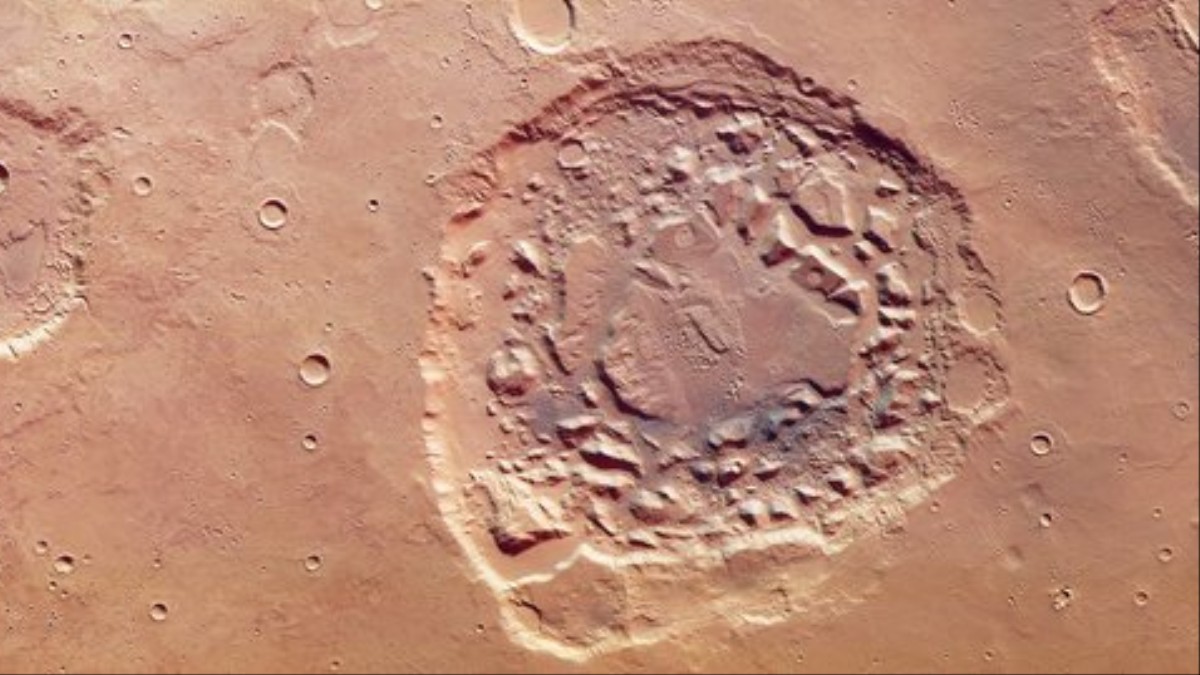
On the scarred terrain of Arabia Terra, a region on Mars that serves as the setting for The Martian, lies a mysterious pockmark known as Ismenia Patera. New imagery released by the European Space Agency (ESA) on Thursday reveals dimensions of this feature that help contextualize its geological evolution (though its origins remain unresolved).
Read More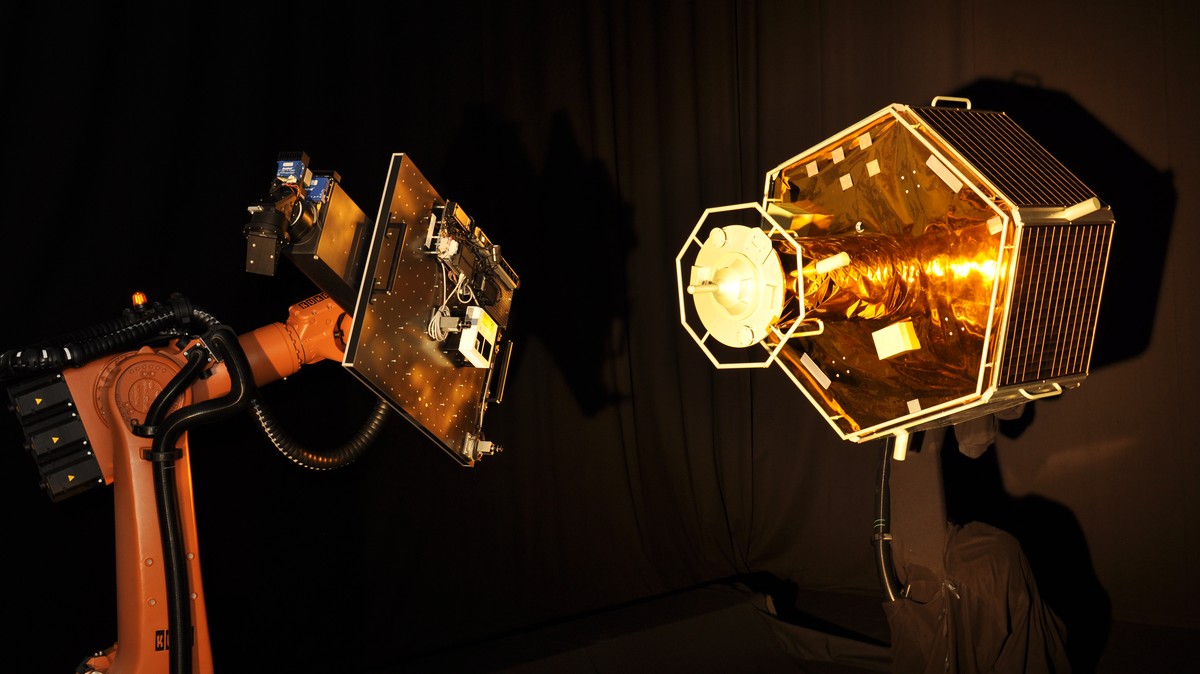
Humans aren’t great at picking up their trash, a fact that is reinforced by the Great Pacific garbage patch and other massive dumps and landfills around the world. As it turns out, we are also taking our talent at producing rubbish into orbit with us. Since the advent of spaceflight in the 1950s, outer space has become congested with about 500,000 bits of spacecraft debris measuring larger than a marble, and 20,000 chunks larger than a softball, according to NASA.
Read More