Hunger Is a Gatekeeper of Pain in the Brain

Hunger Is a Gatekeeper of Pain in the Brain

  • April 25, 2018
Table of Contents

Hunger Is a Gatekeeper of Pain in the Brain

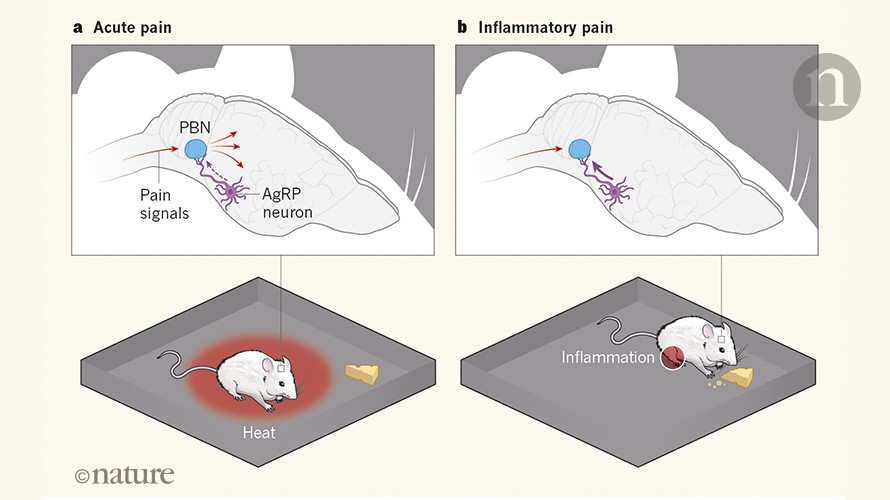
A neuronal population has now been found that regulates two competing needs — hunger and pain. Urgent pain overrides hunger, but appetite-inducing neuronal activity dampens long-term pain responses to enable feeding.

Source: nature.com
Tags :
Share :
comments powered by Disqus

Related Posts

Why Is the Human Brain So Efficient? Massive Parallelism

Why Is the Human Brain So Efficient? Massive Parallelism

Which has more problem-solving power—the brain or the computer? Given the rapid advances in computer technology in the past decades, you might think that the computer has the edge. Indeed, computers have been built and programmed to defeat human masters in complex games, such as chess in the 1990s and recently Go, as well as encyclopedic knowledge contests, such as the TV show Jeopardy!

Read More
The Surprising Relativism of the Brain’s GPS

The Surprising Relativism of the Brain’s GPS

Physics grappled with the question of whether space is absolute or relative for centuries, before deciding in favor of relativity. But, it is only in recent years that the brain sciences have begun to discuss a parallel set of questions. For many years now, absolute space has ruled neuroscience.

Read More
Why Is the Human Brain So Efficient?

Why Is the Human Brain So Efficient?

The brain is complex; in humans it consists of about 100 billion neurons, making on the order of 100 trillion connections. It is often compared with another complex system that has enormous problem-solving power: the digital computer. Both the brain and the computer contain a large number of elementary units—neurons and transistors, respectively—that are wired into complex circuits to process information conveyed by electrical signals.

Read More