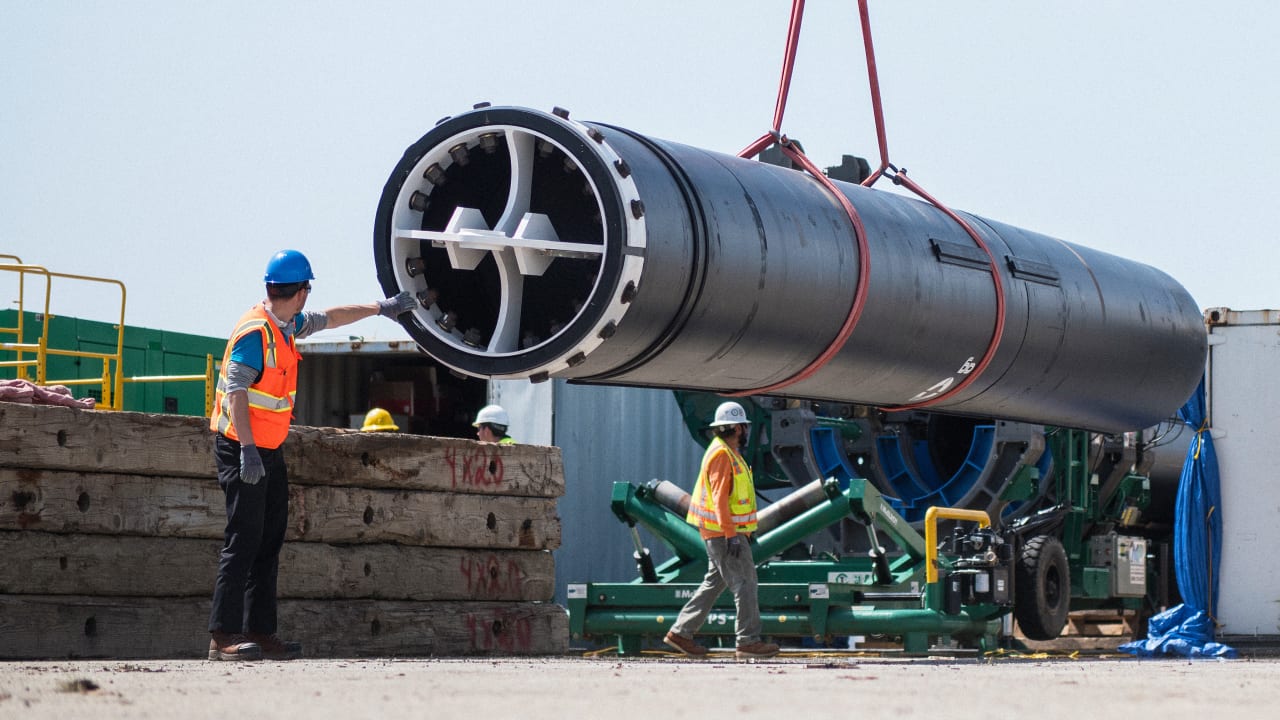
The Ocean Cleanup’s Machine Is About to Set Sail

The Ocean Cleanup’s Machine Is About to Set Sail

  • April 25, 2018
Table of Contents

The Ocean Cleanup’s Machine Is About to Set Sail

Six years ago, the technology was only an idea presented at a TEDx talk. Boyan Slat, the 18-year-old presenter, had learned that cleaning up the tiny particles of plastic in the ocean could take nearly 80,000 years. Because of the volume of plastic spread through the water, and because it is constantly moving with currents, trying to chase it with nets would be a losing proposition.

Slat instead proposed using that movement as an advantage: With a barrier in the water, he argued, the swirling plastic could be collected much more quickly. Then it could be pulled out of the water and recycled.

Source: fastcompany.com

Share :
comments powered by Disqus

Related Posts

Birds can see Earth’s magnetic fields

Birds can see Earth’s magnetic fields

The mystery behind how birds navigate might finally be solved: it’s not the iron in their beaks providing a magnetic compass, but a newly discovered protein in their eyes that lets them ‘see’ Earth’s magnetic fields. These findings come courtesy of two new papers – one studying robins, the other zebra finches. The fancy eye protein is called Cry4, and it’s part of a class of proteins called cryptochromes – photoreceptors sensitive to blue light, found in both plants and animals.

Read More
Some of the World’s Biggest Lakes Are Drying Up

Some of the World’s Biggest Lakes Are Drying Up

We were driving on the lake bottom, yet we were more than 12,000 feet above sea level. The spring air was lip-chapping dry. Many of the fishing villages that have relied on Lake Poopó for thousands of years have emptied too, and we drove past clusters of abandoned adobe homes.

Read More
Japan team maps ‘semi-infinite’ trove of rare earth elements

Japan team maps ‘semi-infinite’ trove of rare earth elements

The deposit, found within Japan’s exclusive economic zone waters, contains more than 16 million tons of the elements needed to build high-tech products ranging from mobile phones to electric vehicles, according to the study, released Tuesday in the journal Scientific Reports.

Read More