Linux System Monitoring with eBPF

Linux System Monitoring with eBPF

  • May 4, 2018
Table of Contents

Linux System Monitoring with eBPF

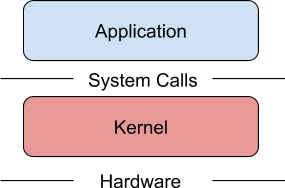
The Linux kernel is an abundant component of modern IT systems. It provides the critical services of hardware abstraction and time-sharing to applications. The classical metrics for monitoring Linux are among the most well known metrics in monitoring: CPU utilization, memory usage, disk utilization, and network throughput.

For a while now, Circonus installations have organized, the key system metrics in the form of a USE Dashboard, as a high level overview of the system resources.

Source: circonus.com

Tags :
Share :
comments powered by Disqus

Related Posts

Lessons from Building Static Analysis Tools at Google

Lessons from Building Static Analysis Tools at Google

Here, we describe how we have applied the lessons from Google’s previous experience with FindBugs Java analysis, as well as from the academic literature, to build a successful static analysis infrastructure used daily by most software engineers at Google. Google’s tooling detects thousands of problems per day that are fixed by engineers, by their own choice, before the problematic code is checked into Google’s companywide codebase.

Read More
NetChain: Scale-free sub-RTT coordination

NetChain: Scale-free sub-RTT coordination

NetChain won a best paper award at NSDI 2018 earlier this month. By thinking outside of the box (in this case, the box is the chassis containing the server), Jin et al. have demonstrated how to build a coordination service (think Apache ZooKeeper) with incredibly low latency and high throughput.

Read More
CoreOS Introduces the Operator Framework: Building Apps on Kubernetes

CoreOS Introduces the Operator Framework: Building Apps on Kubernetes

You may be familiar with Operators from the concept’s introduction in 2016. An Operator is a method of packaging, deploying and managing a Kubernetes application. A Kubernetes application is an application that is both deployed on Kubernetes and managed using the Kubernetes APIs and kubectl tooling.

Read More