NASA completes full-power tests of small, portable nuclear reactor

NASA completes full-power tests of small, portable nuclear reactor

  • May 4, 2018
Table of Contents

NASA completes full-power tests of small, portable nuclear reactor

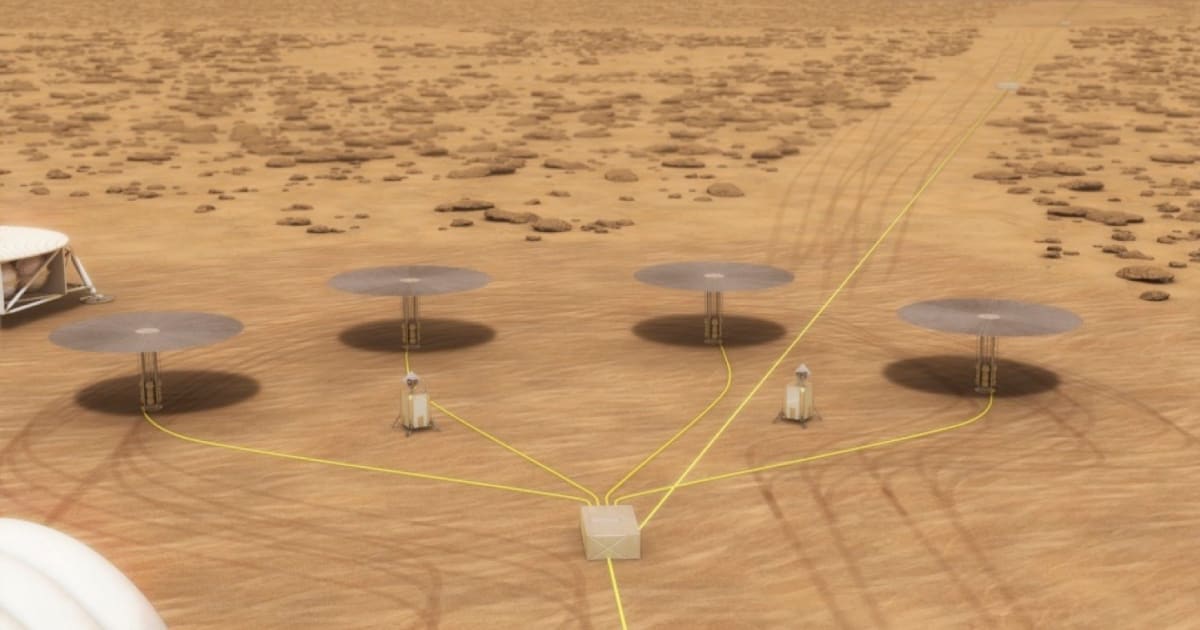
Being able to generate power will be essential for long-term space travel. Powering a stay on Mars, for example, will require a lot of fuel, way more than we can pack onto a rocket. That’s why NASA, Los Alamos National Laboratory, the Department of Energy and a number of other groups have been working on a small, transportable nuclear reactor that can reliably generate power on the go.

The reactor they’re developing is called Kilopower and earlier this year, they announced that they had conducted successful tests of the system. In March, the team ran the first full-power tests and during a press conference today, they reported that those tests went extremely well.

Source: engadget.com
Tags :
Share :
comments powered by Disqus

Related Posts

Improved Hubble data provide fresh evidence for new physics

Improved Hubble data provide fresh evidence for new physics

Measurements made by the European Space Agency’s Planck satellite, which maps the cosmic microwave background, predicted that the Hubble constant value should now be 67 kilometers per second per megaparsec (3.3 million light-years), and could be no higher than 69 kilometers per second per megaparsec. This means that for every 3.3 million light-years farther away a galaxy is from us, it is moving 67 kilometers per second faster. But Riess’s team measured a value of 73 kilometers per second per megaparsec, indicating galaxies are moving at a faster rate than implied by observations of the early universe.

Read More
A Radically Conservative Solution for Cosmology’s Biggest Mystery

A Radically Conservative Solution for Cosmology’s Biggest Mystery

The conflicting measurements have vexed astrophysicists and inspired rampant speculation as to whether unknown physical processes might be causing the discrepancy. Maybe dark matter particles are interacting strongly with the regular matter of planets, stars and galaxies? Or perhaps an exotic particle not yet detected, such as the so-called sterile neutrino, might be playing a role.

Read More