The Army Is Working on Brain Hacks to Help Soldiers Deal With Information Overload

The Army Is Working on Brain Hacks to Help Soldiers Deal With Information Overload

  • May 4, 2018
Table of Contents

The Army Is Working on Brain Hacks to Help Soldiers Deal With Information Overload

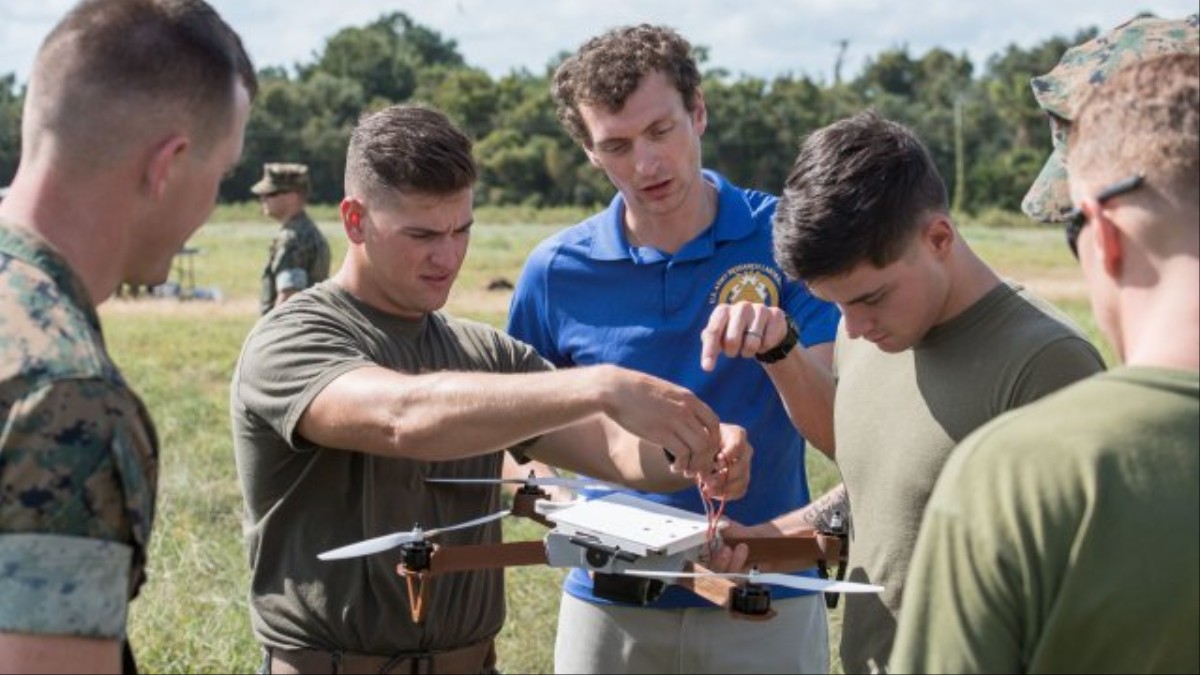
So the ground-combat branch wants to hack troops’ brains, and develop new technologies and methods for pairing human beings and artificial intelligence. The idea is for the AI—’intelligent agent’ is the term the Army uses—to process raw information, leaving the human soldier to do what they’re best at: make decisions, especially creative ones.

Source: vice.com

Share :
comments powered by Disqus

Related Posts

How mirror neurons affect the experience of fandom

How mirror neurons affect the experience of fandom

You won’t have seen it on the podium, but the human brain’s mirror neuron system could have medaled at this year’s Olympic Games, or basically any sporting event with an audience. The mirror neuron system is a network of neurons that activates both when you watch someone do something and when you do it yourself, and it turns out to be an important part of the subjective experience of being a fan.

Read More
What tech calls “AI” isn’t really AI

What tech calls “AI” isn’t really AI

First, the problem itself is poorly defined: what do you mean by intelligence? Nature, with all her blind hideous strength, endless experimentation and wild wastes of infinite time, has only managed the trick once (by our narrow definition), with one species of tree-ape on a rolling green world. Even if you believe there’s intelligent biological life elsewhere, the stats aren’t promising.

Read More
Hacking the Brain with Adversarial Images

Hacking the Brain with Adversarial Images

This is an example of what’s called an adversarial image: an image specifically designed to fool neural networks into making an incorrect determination about what they’re looking at. Researchers at Google Brain decided to try and figure out whether the same techniques that fool artificial neural networks can also fool the biological neural networks inside of our heads, by developing adversarial images capable of making both computers and humans think that they’re looking at something they aren’t.

Read More