Troubled Times for Alternatives to Einstein’s Theory of Gravity

Troubled Times for Alternatives to Einstein’s Theory of Gravity

  • May 6, 2018
Table of Contents

Troubled Times for Alternatives to Einstein’s Theory of Gravity

Zumalacárregui, a theoretical physicist at the Berkeley Center for Cosmological Physics, had been studying how the discovery of a neutron-star collision would affect so-called “alternative” theories of gravity. These theories attempt to overcome what many researchers consider to be two enormous problems with our understanding of the universe. Observations going back decades have shown that the universe appears to be filled with unseen particles — dark matter — as well as an anti-gravitational force called dark energy.

Alternative theories of gravity attempt to eliminate the need for these phantasms by modifying the force of gravity in such a way that it properly describes all known observations — no dark stuff required.

Source: quantamagazine.org

Tags :
Share :
comments powered by Disqus

Related Posts

Yale physicists find signs of a time crystal

Yale physicists find signs of a time crystal

Time crystals, first identified in 2016, are different. Their atoms spin periodically, first in one direction and then in another, as a pulsating force is used to flip them. That’s the “ticking.”

Read More
Particle Physics Resurrects Alexander Graham Bell’s Voice

Particle Physics Resurrects Alexander Graham Bell’s Voice

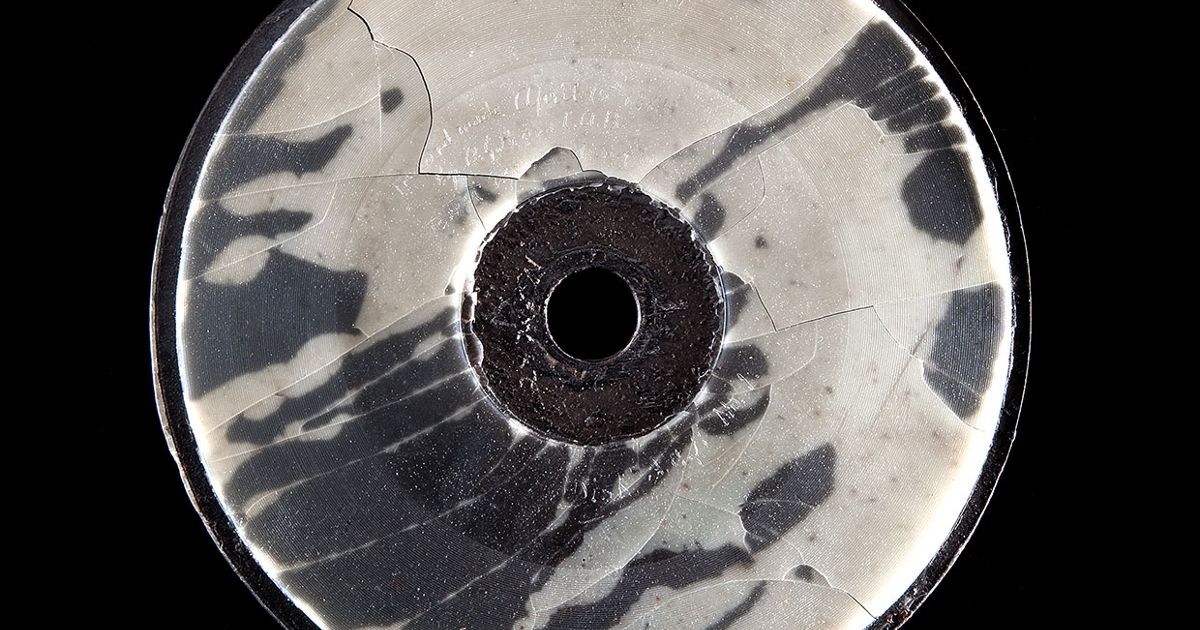
In 1880, Alexander Graham Bell decided to go head-to-head with Thomas Edison. His goal: improving—and commercializing—the phonograph. Bell established the Volta Laboratory in Washington, D.C., using prize money he’d received from the French government for his invention of the telephone.

Read More
The 315-Year-Old Science Experiment

The 315-Year-Old Science Experiment

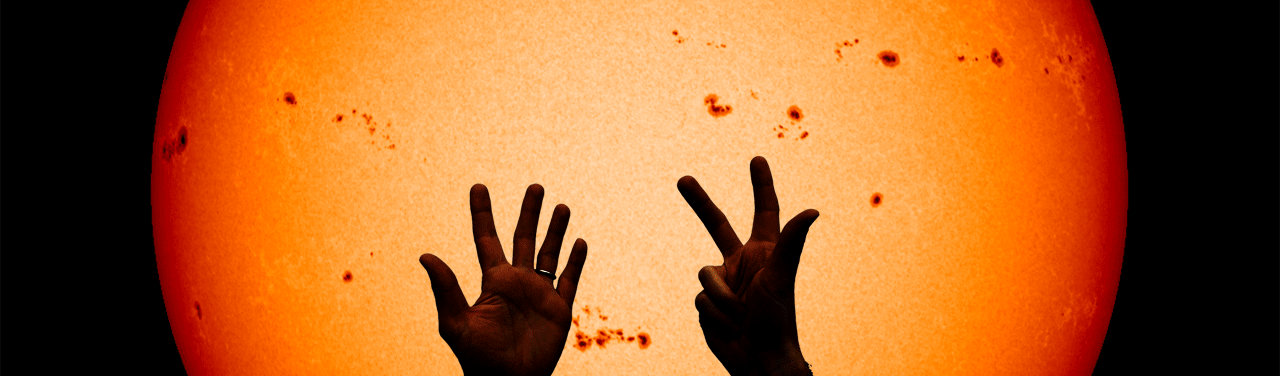
The most arrogant astronomer in Switzerland in the mid-20th century was a solar physicist named Max Waldmeier. Colleagues were so relieved when he retired in 1980 that they nearly retired the initiative he led as director of the Zurich Observatory. Waldmeier was in charge of a practice that dated back to Galileo and remains one of the longest continuous scientific practice in history: counting sunspots.

Read More