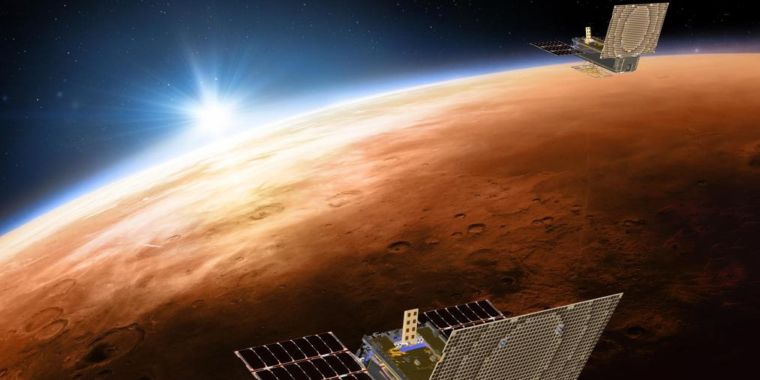
For the first time, two CubeSats have gone interplanetary

For the first time, two CubeSats have gone interplanetary

  • May 8, 2018
Table of Contents

For the first time, two CubeSats have gone interplanetary

The first CubeSats launched in 2003, and in less than a decade, more than 100 had reached orbit around Earth. The aerospace industry has debated whether the 2kg to 15kg microsatellites are a fad, a toy, or a disruptive technology that will change the way we ultimately observe and study Earth and the rest of the Solar System. However, what is now beyond doubt is that the first CubeSats have gone interplanetary.

Source: arstechnica.com

Share :
comments powered by Disqus

Related Posts

NASA completes full-power tests of small, portable nuclear reactor

NASA completes full-power tests of small, portable nuclear reactor

Being able to generate power will be essential for long-term space travel. Powering a stay on Mars, for example, will require a lot of fuel, way more than we can pack onto a rocket. That’s why NASA, Los Alamos National Laboratory, the Department of Energy and a number of other groups have been working on a small, transportable nuclear reactor that can reliably generate power on the go.

Read More
New Shepard flies again, bringing suborbital space tourism closer

New Shepard flies again, bringing suborbital space tourism closer

Sunday’s flight was Blue Origin’s eighth overall launch of the New Shepard system and the second time this particular spacecraft and booster have flown. They last flew in December. It is believed that this capsule, the third one built by the company, will undergo extensive testing before crew flights begin in the fourth vehicle.

Read More
Drilling with Curiosity

Drilling with Curiosity

Remotely operating a rover on another planet so that it can gather and analyze samples requires extensive planning, failure work-arounds, and compromise.

Read More