NASA’s Orion spacecraft getting closer to finally flying again

NASA’s Orion spacecraft getting closer to finally flying again

  • May 9, 2018
Table of Contents

NASA’s Orion spacecraft getting closer to finally flying again

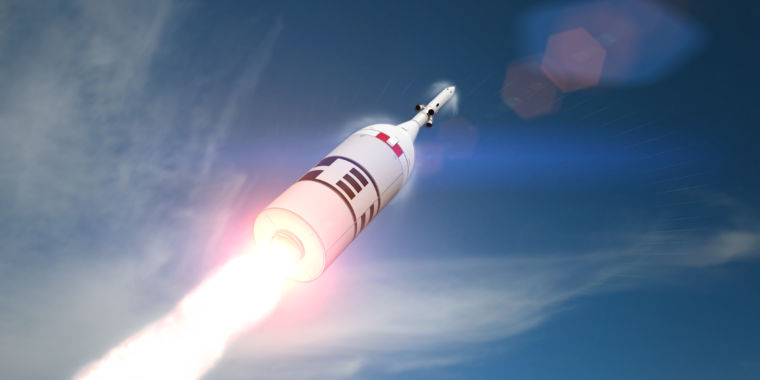
It has been a long three-and-a-half years since the Orion spacecraft first launched into space in December 2014, making a successful shake-out flight. But now, NASA’s program aimed at building a large, deep-space capsule capable of sending astronauts to and from lunar orbit is finally ramping back up toward a series of test flights. In less than a year, a boilerplate model of the Orion spacecraft will be jettisoned from its rocket at 55 seconds after liftoff, to test the vehicle’s launch abort system.

Provided that goes well, about a year after that, the Orion spacecraft will be sent into lunar orbit for longer than a week for a shakedown cruise. Finally, as early as June 2022, two to four astronauts will fly aboard Orion into lunar orbit, sending humans into deep space for the first time since 1972.

Source: arstechnica.com

Share :
comments powered by Disqus

Related Posts

For the first time, two CubeSats have gone interplanetary

For the first time, two CubeSats have gone interplanetary

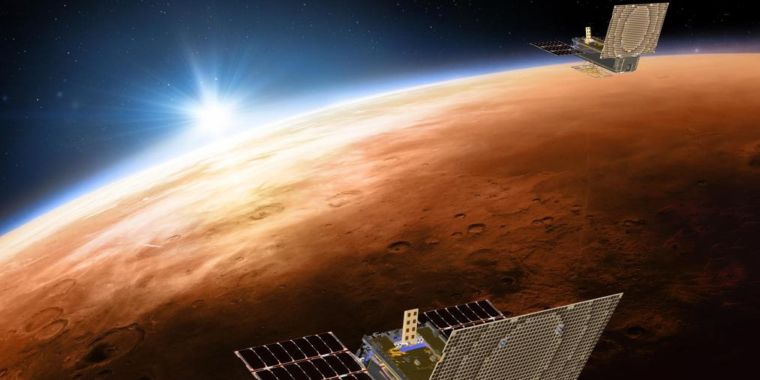
The first CubeSats launched in 2003, and in less than a decade, more than 100 had reached orbit around Earth. The aerospace industry has debated whether the 2kg to 15kg microsatellites are a fad, a toy, or a disruptive technology that will change the way we ultimately observe and study Earth and the rest of the Solar System. However, what is now beyond doubt is that the first CubeSats have gone interplanetary.

Read More
NASA’s Launching a Lander That Will Dig on Mars

NASA’s Launching a Lander That Will Dig on Mars

InSight will accomplish this feat with its Heat Flow and Physical Properties Package (HP3), nicknamed “the mole” because it can burrow through regolith (the loose rocky surface layer on Mars and many other terrestrial planets). The instrument consists of a tube with a spring-loaded mechanism that will hammer out a hole in half-meter increments. Every 50 centimeters, it will stop for several hours or days to take thermal measurements and cool down from the frictional and operational heat generated by the dig process.

Read More