AI trained to navigate develops brain-like location tracking
Table of Contents
Now that DeepMind has solved Go, the company is applying DeepMind to navigation. Navigation relies on knowing where you are in space relative to your surroundings and continually updating that knowledge as you move. DeepMind scientists trained neural networks to navigate like this in a square arena, mimicking the paths that foraging rats took as they explored the space.
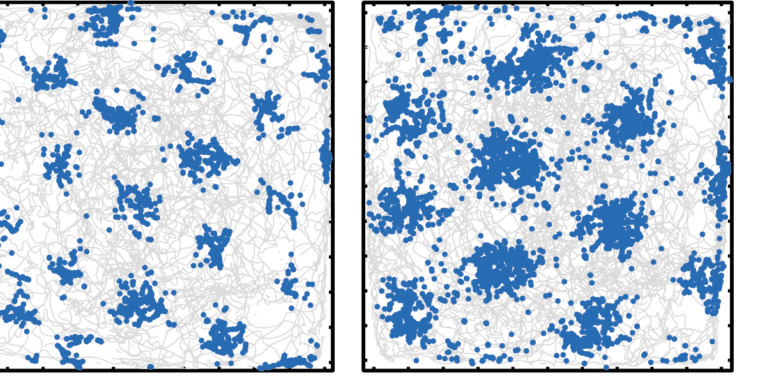
The networks got information about the rat’s speed, head direction, distance from the walls, and other details. To researchers’ surprise,the networks that learned to successfully navigate this space had developed a layer akin to grid cells. This was surprising because it is the exact same system that mammalian brains use to navigate.
A few different cell populations in our brains help us make our way through space. Place cells are so named because they fire when we pass through a particular place in our environment relative to familiar external objects. They are located in the hippocampus—a brain region responsible for memory formation and storage—and are thus thought to provide a cellular place for our memories.
Grid cells got their name because they superimpose a hypothetical hexagonal grid upon our surroundings, as if the whole world were overlaid with vintage tiles from the floor of a New York City bathroom. They fire whenever we pass through a node on that grid.
Source: arstechnica.com