Automatic Photography with Google Clips

Automatic Photography with Google Clips

  • May 12, 2018
Table of Contents

Automatic Photography with Google Clips

How could we train an algorithm to recognize interesting moments? As with most machine learning problems, we started with a dataset. We created a dataset of thousands of videos in diverse scenarios where we imagined Clips being used.

We also made sure our dataset represented a wide range of ethnicities, genders, and ages. We then hired expert photographers and video editors to pore over this footage to select the best short video segments. These early curations gave us examples for our algorithms to emulate.

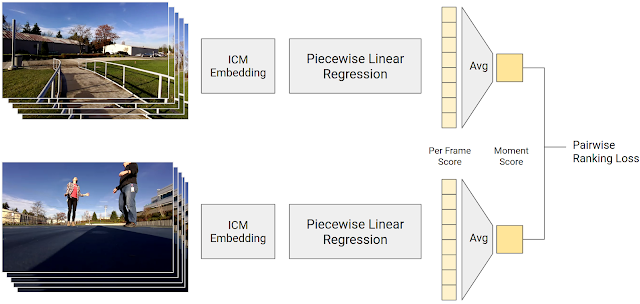
However, it is challenging to train an algorithm solely from the subjective selection of the curators — one needs a smooth gradient of labels to teach an algorithm to recognize the quality of content, ranging from ‘perfect’ to ‘terrible.’ To address this problem, we took a second data-collection approach, with the goal of creating a continuous quality score across the length of a video. We split each video into short segments (similar to the content Clips captures), randomly selected pairs of segments, and asked human raters to select the one they prefer.

Source: googleblog.com
Tags :
Share :
comments powered by Disqus

Related Posts

AI trained to navigate develops brain-like location tracking

AI trained to navigate develops brain-like location tracking

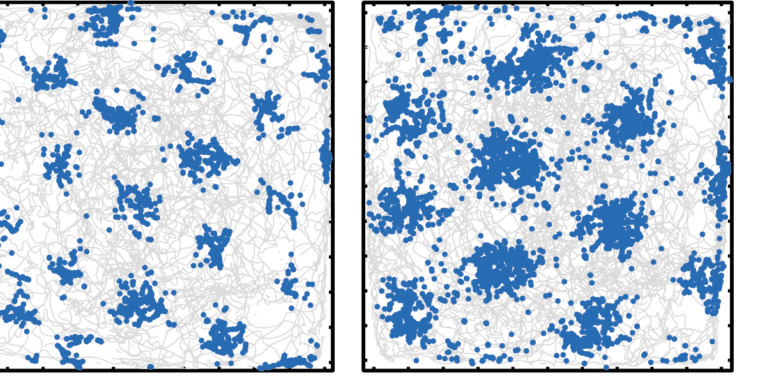
Now that DeepMind has solved Go, the company is applying DeepMind to navigation. Navigation relies on knowing where you are in space relative to your surroundings and continually updating that knowledge as you move. DeepMind scientists trained neural networks to navigate like this in a square arena, mimicking the paths that foraging rats took as they explored the space.

Read More
Custom deep learning loss functions with Keras for R

Custom deep learning loss functions with Keras for R

I recently started reading “Deep Learning with R”, and I’ve been really impressed with the support that R has for digging into deep learning. One of the use cases presented in the book is predicting prices for homes in Boston, which is an interesting problem because homes can have such wide variations in values. This is a machine learning problem that is probably best suited for classical approaches, such as XGBoost, because the data set is structured rather than perceptual data.

Read More
Delivery Robots Will Rely on Human Kindness and Labor

Delivery Robots Will Rely on Human Kindness and Labor

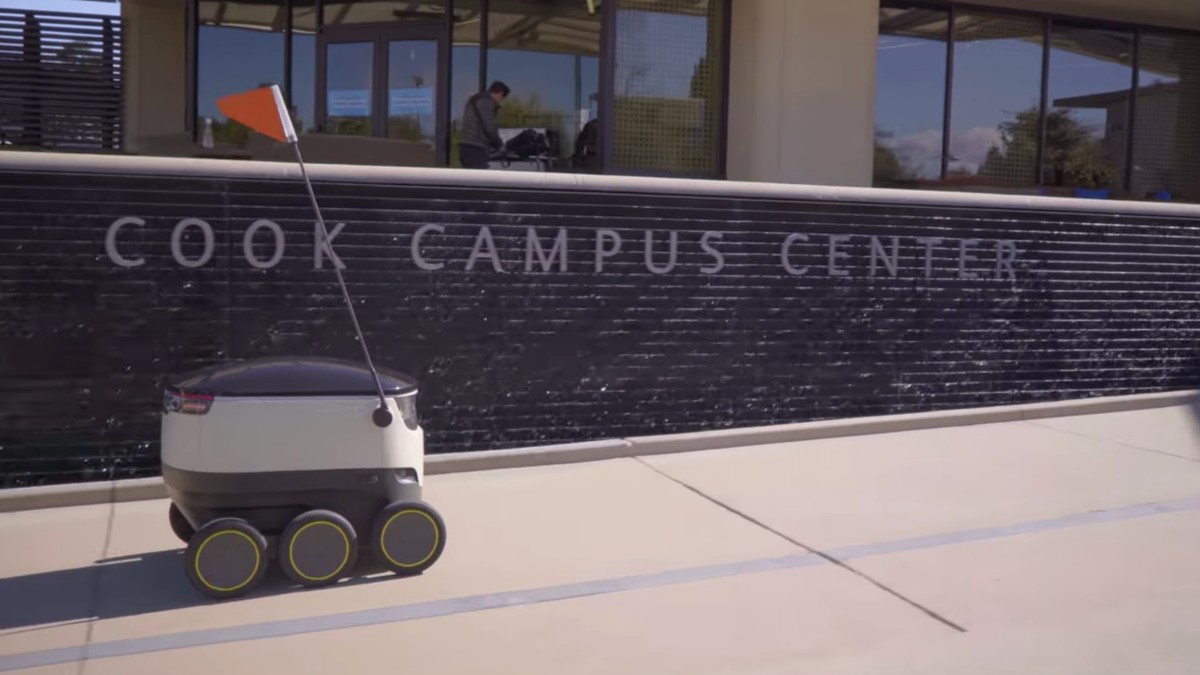
In April, Starship Technologies announced that it is going to launch “robot delivery services for campuses.” Its goal is to deploy at least 1,000 delivery robots to “corporate and academic campuses in Europe and the U.S.” within the next year. It’s the latest in a long list of automated delivery schemes from a tech companies big and small.

Read More