Custom deep learning loss functions with Keras for R

Custom deep learning loss functions with Keras for R

  • May 12, 2018
Table of Contents

Custom deep learning loss functions with Keras for R

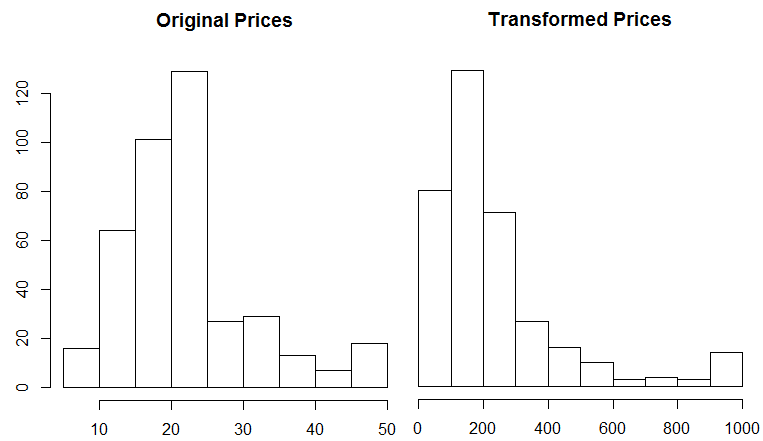
I recently started reading “Deep Learning with R”, and I’ve been really impressed with the support that R has for digging into deep learning. One of the use cases presented in the book is predicting prices for homes in Boston, which is an interesting problem because homes can have such wide variations in values. This is a machine learning problem that is probably best suited for classical approaches, such as XGBoost, because the data set is structured rather than perceptual data.

However, it’s also a data set where deep learning provides a really useful capability, which is the ease of writing new loss functions that may improve the performance of predictive models. The goal of this post is to show how deep learning can potentially be used to improve shallow learning problems by using custom loss functions.

Source: towardsdatascience.com
Share :
comments powered by Disqus

Related Posts

AI trained to navigate develops brain-like location tracking

AI trained to navigate develops brain-like location tracking

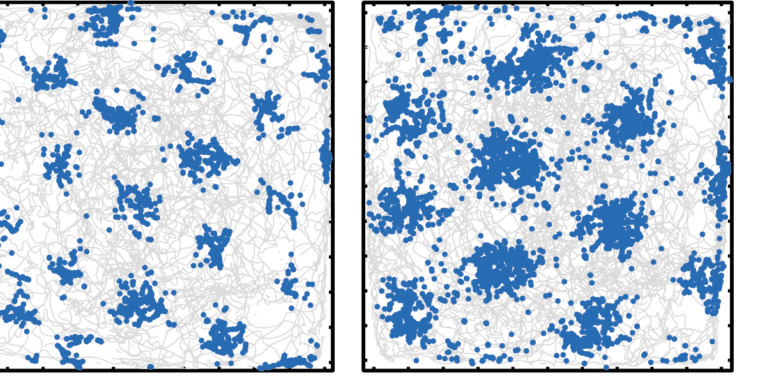
Now that DeepMind has solved Go, the company is applying DeepMind to navigation. Navigation relies on knowing where you are in space relative to your surroundings and continually updating that knowledge as you move. DeepMind scientists trained neural networks to navigate like this in a square arena, mimicking the paths that foraging rats took as they explored the space.

Read More
Google: Deep Learning for Electronic Health Records

Google: Deep Learning for Electronic Health Records

When patients get admitted to a hospital, they have many questions about what will happen next. When will I be able to go home? Will I get better?

Read More
AI Can Generate ‘Doom’ Levels Now

AI Can Generate ‘Doom’ Levels Now

Researchers recently successfully trained neural networks to generate level maps for Doom that, they report in a paper published to the arXiv preprint server in April, “proved to be interesting” to play. The work was carried out by researchers from the Polytechnic University of Milan and used Generative Adversarial Networks, a recent innovation in the field of deep learning.

Read More