Germany adopts first ethics standards for autonomous driving systems

Germany adopts first ethics standards for autonomous driving systems

  • May 13, 2018
Table of Contents

Germany adopts first ethics standards for autonomous driving systems

Federal transport minister, Alexander Dobrindt, presented a report to Germany’s cabinet seeking to establish guidelines for the future programming of ethical standards into automated driving software. The report, was prepared by an automated driving ethics commission comprised of scientists and legal experts and produced 20 guidelines to be used by the automotive industry when creating automated driving systems. Shortly after its introduction, Dobrindt announced that the cabinet ratified the guidelines, making Germany the first government in the world to put such measures in place.

Autonomous driving systems become an ethical imperative if the systems cause fewer accidents than human drivers. Human safety must always take top priority over damage to animals or property. In the event of an unavoidable accident, any discrimination based on age, gender, race, physical attributes, or any other distinguishing factors are impermissible.

In any driving situation, the party responsible, whether human or computer, must be clearly regulated and apparent. For liability purposes, a “black box” of driver data must always be documented and stored. Drivers retain sole ownership over whether or not their vehicle data is forwarded or used by third parties.

While vehicles may react autonomously in the event of emergency situations, humans shall regain control during more morally ambiguous events.

Source: here.com
Share :
comments powered by Disqus

Related Posts

AI trained to navigate develops brain-like location tracking

AI trained to navigate develops brain-like location tracking

Now that DeepMind has solved Go, the company is applying DeepMind to navigation. Navigation relies on knowing where you are in space relative to your surroundings and continually updating that knowledge as you move. DeepMind scientists trained neural networks to navigate like this in a square arena, mimicking the paths that foraging rats took as they explored the space.

Read More
Intel Starts R&D Effort in Probabilistic Computing for AI

Intel Starts R&D Effort in Probabilistic Computing for AI

Intel announced today that it is forming a strategic research alliance to take artificial intelligence to the next level. Autonomous systems don’t have good enough ways to respond to the uncertainties of the real world, and they don’t have a good enough way to understand how the uncertainties of their sensors should factor into the decisions they need to make. According to Intel CTO Mike Mayberry the answer is “probabilistic computing”, which he says could be AI’s next wave.

Read More
Custom deep learning loss functions with Keras for R

Custom deep learning loss functions with Keras for R

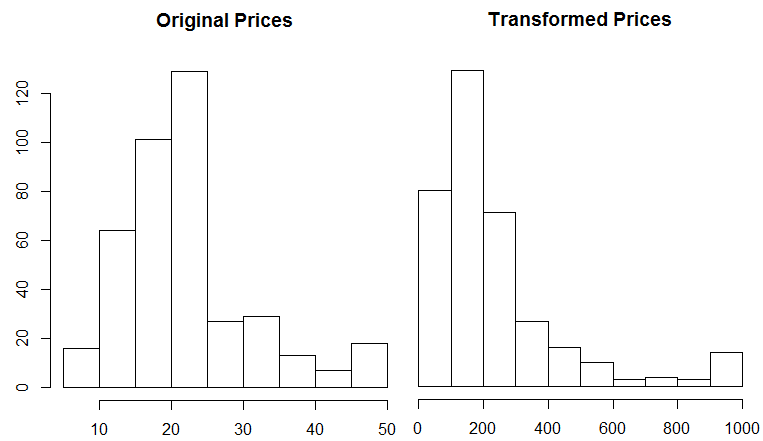
I recently started reading “Deep Learning with R”, and I’ve been really impressed with the support that R has for digging into deep learning. One of the use cases presented in the book is predicting prices for homes in Boston, which is an interesting problem because homes can have such wide variations in values. This is a machine learning problem that is probably best suited for classical approaches, such as XGBoost, because the data set is structured rather than perceptual data.

Read More