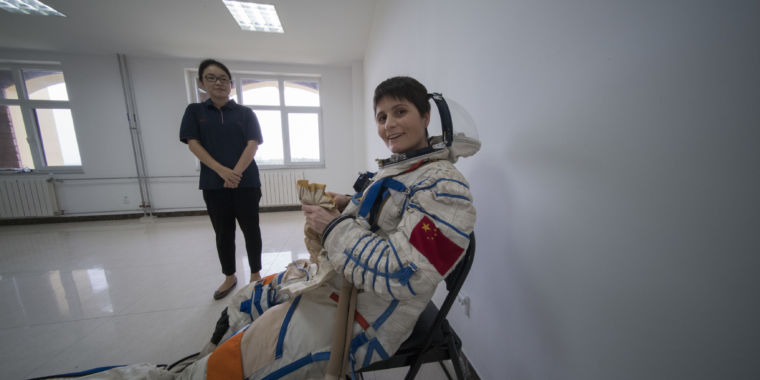
China just invited the world to its space station
Table of Contents
At a time when NASA and its partners are trying to decide how long to maintain the International Space Station, China has taken the significant step of inviting the world to its planned orbital station. The China Space Station, or CSS, could become operational as soon as 2022. Such an announcement represents potentially the greatest soft power threat of the last six decades to US and Russian dominance of spaceflight.
In the public announcement of this policy on China’s state news service Xinhua, Chinese officials said the countrystands ready to help other developing countries interested in space technology—and in having their own space programs. This inclusive approach (though just how inclusive an authoritarian government can be remains to be seen) offers a rebuke of sorts to the US government and the International Space Station. By law, the US forbids direct involvement between China’s space program and NASA.
Some at NASA want to change this, but Congress has established such rules to prevent technology transfer. Now that the ISS may go away as soon as 2025, when the White House wants to end most of NASA’s $3 to $4 billion a year support for station activities, China sees an opportunity to position itself as an alternative to nations with programs that cannot get their own people and experiments into space. This includes both developing nations as well as NASA’s longtime European partners.
Source: arstechnica.com