Evidence Found for a New Fundamental Particle

Evidence Found for a New Fundamental Particle

  • June 2, 2018
Table of Contents

Evidence Found for a New Fundamental Particle

An experiment at the Fermi National Accelerator Laboratory near Chicago has detected far more electron neutrinos than predicted — a possible harbinger of a revolutionary new elementary particle called the sterile neutrino, though many physicists remain skeptical. Inside the MiniBooNE tank, photodetectors capture the light created when a neutrino interacts with an atomic nucleus. Physicists are both thrilled and baffled by a new report from a neutrino experiment at Fermi National Accelerator Laboratory near Chicago.

The MiniBooNE experiment has detected far more neutrinos of a particular type than expected, a finding that is most easily explained by the existence of a new elementary particle: a “sterile” neutrino that’s even stranger and more reclusive than the three known neutrino types. The result appears to confirm the anomalous results of a decades-old experiment that MiniBooNE was built specifically to double-check. The persistence of the neutrino anomaly is extremely exciting, said the physicist Scott Dodelson of Carnegie Mellon University.

It “would indicate that something is indeed going on,” added Anže Slosar of Brookhaven National Laboratory.

Source: quantamagazine.org

Tags :
Share :
comments powered by Disqus

Related Posts

Mathematicians Disprove Conjecture Made to Save Black Holes

Mathematicians Disprove Conjecture Made to Save Black Holes

Nearly 40 years after it was proposed, mathematicians have settled one of the most profound questions in the study of general relativity. In a paper posted online last fall, mathematicians Mihalis Dafermos and Jonathan Luk have proven that the strong cosmic censorship conjecture, which concerns the strange inner workings of black holes, is false. The strong cosmic censorship conjecture was proposed in 1979 by the influential physicist Roger Penrose.

Read More
Muons: the little-known particles helping to probe the impenetrable

Muons: the little-known particles helping to probe the impenetrable

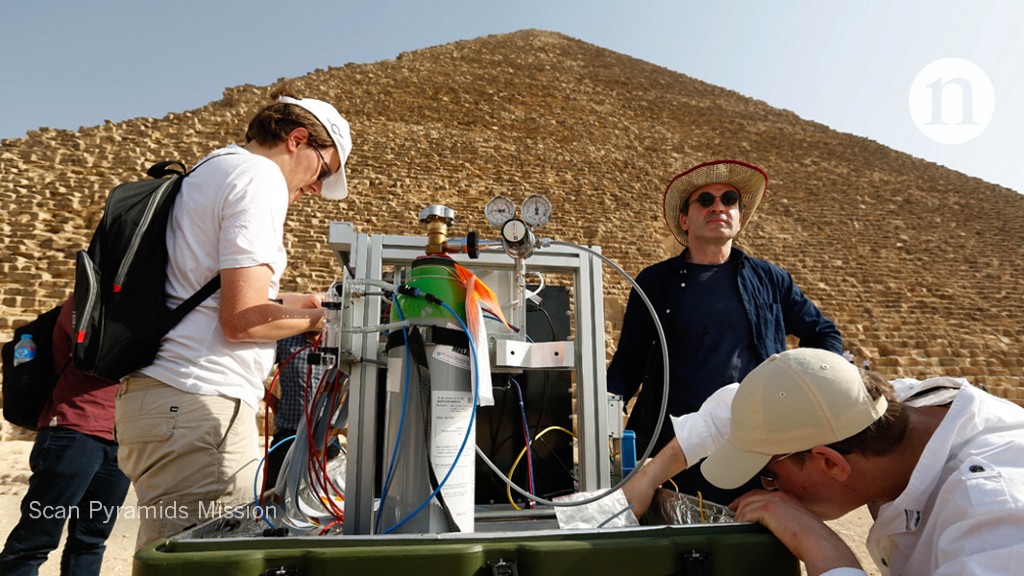
The muon is going mainstream. The particle, a heavy version of the electron that rains down on every square centimetre of Earth, is little known outside particle physics — and last year it helped archaeologists to make a stunning discovery of a previously unknown chamber in Egypt’s Great Pyramid1. Volcanologists and nuclear engineers are also finding new uses for the same technique, called muography, which harnesses muons to probe the innards of dense structures.

Read More
Engineered Band Gap Pushes Graphene Closer to Displacing Silicon

Engineered Band Gap Pushes Graphene Closer to Displacing Silicon

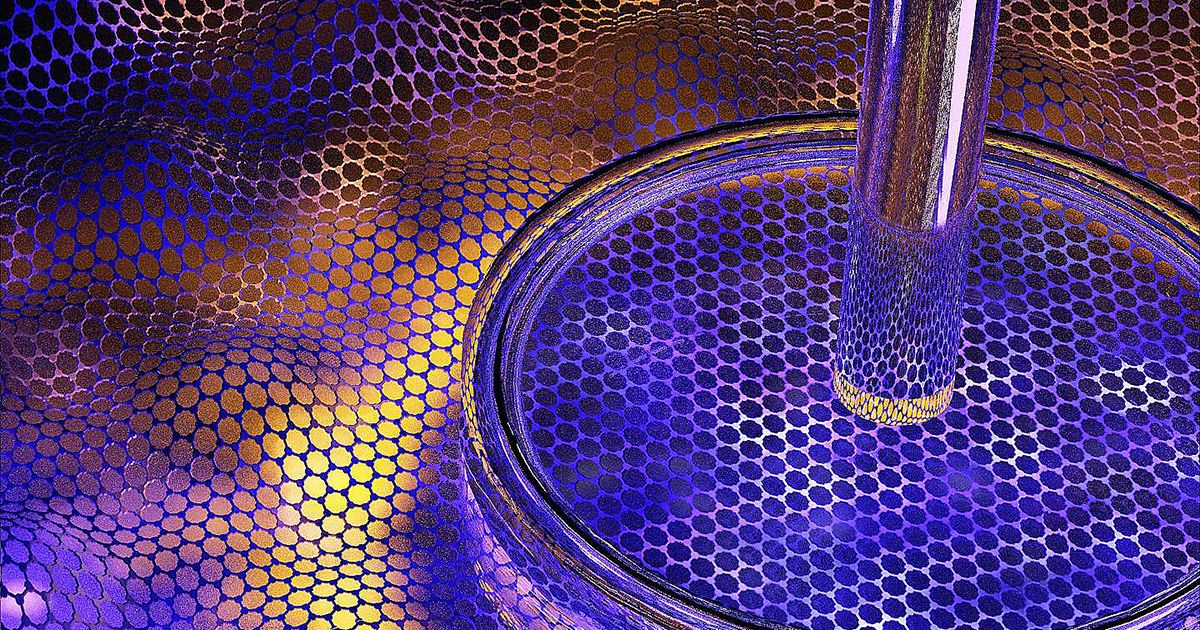
A new method for engineering a band gap into graphene maintains its attractive electronic properties Graphene might bethe best conductor of electrons we know. However, as a pure conductor it can’t stop the flow of electrons like a semiconductor such as siliconcan. Silicon’s ability to create an on/off state for the flow of electrons makes it possible to create the “0” and “1” of binary digital logic for computing.

Read More