
M3: Uber’s Open Source Large-Scale Metrics Platform for Prometheus

M3: Uber’s Open Source Large-Scale Metrics Platform for Prometheus

  • August 8, 2018
Table of Contents

M3: Uber’s Open Source Large-Scale Metrics Platform for Prometheus

M3, Uber’s open source metrics platform for Prometheus, facilitates scalable and configurable multi-tenant storage for large-scale metrics. To facilitate the growth of Uber’s global operations, we need to be able to quickly store and access billions of metrics on our back-end systems at any given time. As part of our robust and scalable metrics infrastructure, we built M3, a metrics platform that has been in use at Uber for several years now.

M3 reliably houses large-scale metrics over long retention time windows. To offer others in the broader community these benefits, we decided to open source the M3 platform as a remote storage backend for Prometheus, a popular monitoring and alerting solution. As itsdocumentation states, Prometheus’ scalability and durability is limited by single nodes.

The M3 platform aims to provide a turnkey, scalable, and configurable multi-tenant store for Prometheus metrics. As part of this effort, we recently releasedM3DB, the scalable storage backend for M3. M3DB is a distributed time series store and reverse index with configurable out-of-order writes.

Additionally, we are open sourcing M3 Coordinator, a Prometheus sidecar which provides a global query and storage interface on top of M3DB clusters. The M3 Coordinator also performs downsampling, as well as ad hoc retention and aggregation of metrics using retention and rollup rules. This allows us to apply specific retention and aggregations to subsets of metrics on the fly with the rules stored in etcd, which runs embedded in the binary of an M3DB seed node.

Source: uber.com
Share :
comments powered by Disqus

Related Posts

Showdown: MySQL 8 vs. PostgreSQL 10

Showdown: MySQL 8 vs. PostgreSQL 10

Now that MySQL 8 and PostgreSQL 10 are out, it’s a good time to revisit how the two major open source relational databases compete against each other. Before these versions, the general perception has been that while Postgres is superior in feature sets and its pedigree, MySQL is more battle tested at scale with massive concurrent reads/writes. But with the latest releases, the gap between the two has gotten significantly narrowed.

Read More
Open-sourcing gVisor, a sandboxed container runtime

Open-sourcing gVisor, a sandboxed container runtime

Containers have revolutionized how we develop, package, and deploy applications. However, the system surface exposed to containers is broad enough that many security experts don’t recommend them for running untrusted or potentially malicious applications. A growing desire to run more heterogenous and less trusted workloads has created a new interest in sandboxed containers—containers that help provide a secure isolation boundary between the host OS and the application running inside the container.

Read More
Introducing kepler.gl, Uber’s Open Source Geospatial Toolbox

Introducing kepler.gl, Uber’s Open Source Geospatial Toolbox

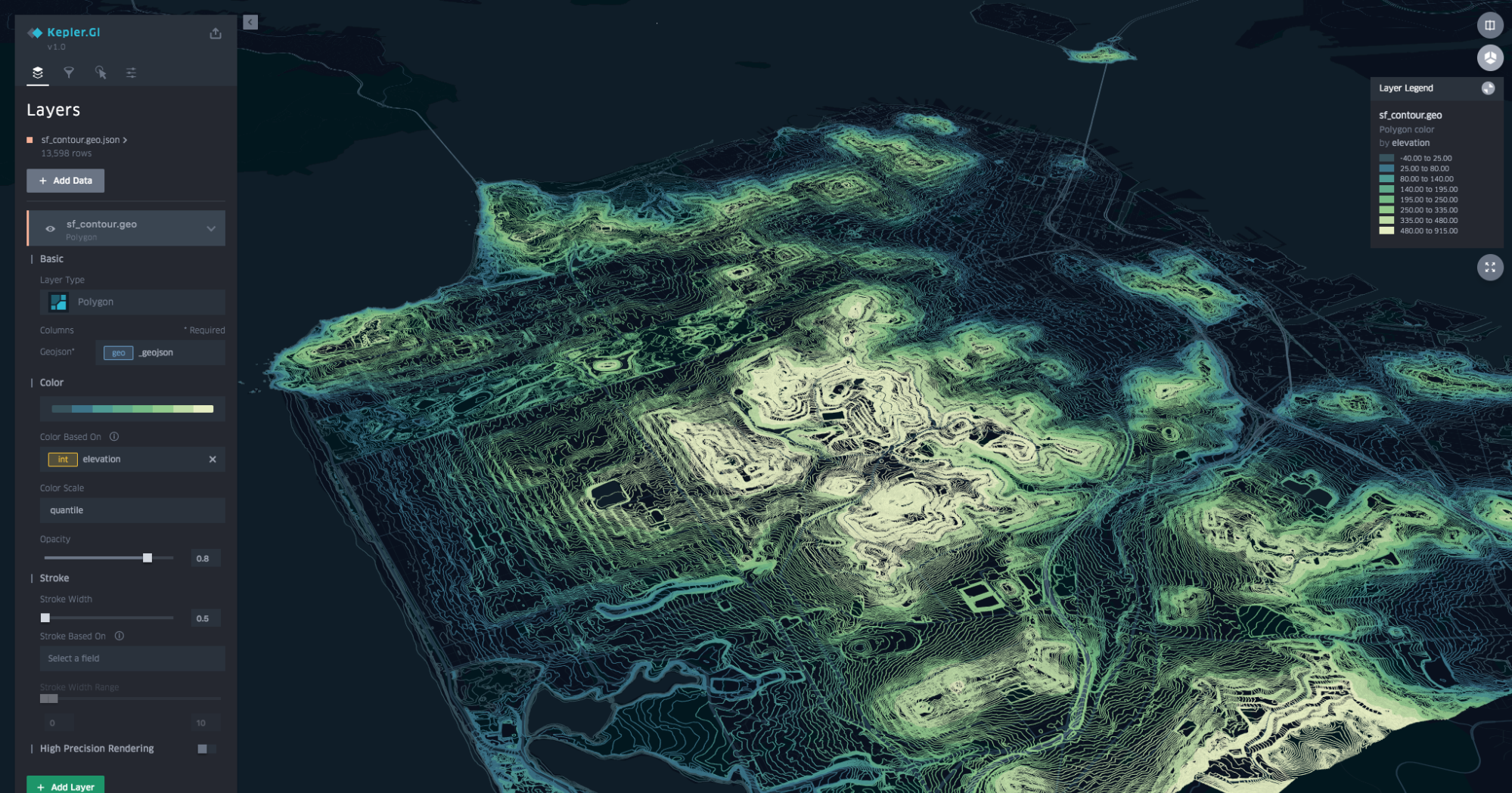
Created by Uber’s Visualization team, kepler.gl is an open source data agnostic, high-performance web-based application for large-scale geospatial visualizations. At Uber, we leverage data visualization to better understand how our cities move. Our solutions enable us to embed maps with rich location data, render millions of GPS points in the blink of an eye, and, most importantly, derive insights from them.

Read More