Lockheed Martin proposes a mega-lunar lander: 62 tons and an elevator

Lockheed Martin proposes a mega-lunar lander: 62 tons and an elevator

  • October 3, 2018
Table of Contents

Lockheed Martin proposes a mega-lunar lander: 62 tons and an elevator

With the Trump administration setting lunar exploration as the principal human spaceflight goal in the near-term, NASA has begun devising a plan for how best to meet that goal. As part of this development process, companies have begun pitching ideas to the space agency’s human exploration program about how they could help (and why they should be funded). Some companies have talked with NASA privately about their proposed spaceflight hardware, while others have been more publicly forthcoming.

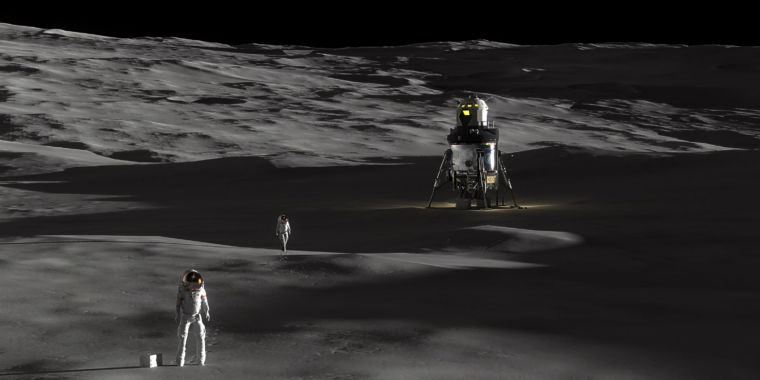
Aerospace giant Lockheed Martin is one of the latter—the company is already building the Orion spacecraft for NASA to carry its astronauts into deep space and says it can extend the utility of this blueprint down to the surface of the Moon. The company’s proposal for a ‘crewed lunar lander’ is fairly ambitious. The 14-meter, single-stage spacecraft can carry up to four astronauts to the lunar surface, where they can stay for up to 14 days before the vehicle’s engines blast it back into lunar orbit.

This vehicle would be twice as tall as the Lunar Module used during the Apollo missions to the Moon nearly half a century ago. That vehicle carried two astronauts for short stays of no more than a few days.

Source: arstechnica.com

Tags :
Share :
comments powered by Disqus

Related Posts

World’s Biggest Planetarium Achieves Jaw-Dropping 10K Resolution

World’s Biggest Planetarium Achieves Jaw-Dropping 10K Resolution

Planetarium No. 1, the world’s biggest planetarium, uses NVIDIA graphics to showcase the universe with a level of clarity, detail and interactivity like never before. Russian dome with half-acre of screen area powered by NVIDIA Quadro graphics. Housed in a 19th century natural gas storage building, the planetarium’s exterior is about the only thing that isn’t on the cutting edge of modernity.

Read More
NASA is bringing cryosleep chambers out of fiction

NASA is bringing cryosleep chambers out of fiction

NASA and SpaceWorks Enterprises are currently developing a stasis chamber (as opposed to individual pods like those in the movie) that could induce an extended state of torpor, or metabolic inactivity medically brought on by lowering body temperature to the point of mild hypothermia, that could allow astronauts to snooze for at least two weeks on end during longer missions. Also unlike Alien, in which everyone is temporarily in freeze-frame until the ship arrives at its destination, the crew would rotate cryosleep shifts so there is always someone conscious in case something goes awry where no one can here you scream. SpaceWorks’ objective is to “place crew and passengers in a prolonged hypothermic state during space-mission transit phases (outbound and Earth-return) to significantly reduce the system mass, power, habitable volume, and medical challenges associated with long-duration space exploration,” as explained on their website.

Read More