EPO Issues First Guidelines on AI Patents

EPO Issues First Guidelines on AI Patents

  • November 7, 2018
Table of Contents

EPO Issues First Guidelines on AI Patents

The European Patent Office (EPO) has issued official guidelines on the patenting of artificial intelligence and machine learning technologies. The guidelines became valid on November 1st, 2018. When determining whether the claimed subject-matter satisfies this condition, the guidelines note that expressions such as “support vector machine,” “reasoning engine” or “neural network” may not qualify, as these are regarded as terms for mathematical methods which do not have a unique technical character of their own.

The EPO provided examples of mathematical methods (ie artificial intelligence and machine learning related applications) which can pass the technical character threshold: Digital audio, image or video enhancement or analysis, e.g. de-noising, detecting persons in a digital image, estimating the quality of a transmitted digital audio signal;Separation of sources in speech signals; speech recognition, e.g. mapping a speech input to a text output;Encoding data for reliable and/or efficient transmission or storage (and corresponding decoding), e.g. error-correction coding of data for transmission over a noisy channel, compression of audio, image, video or sensor data;Encrypting/decrypting or signing electronic communications; generating keys in an RSA cryptographic system;Optimising load distribution in a computer network;Providing a medical diagnosis by an automated system processing physiological measurements(A generic purpose such as “controlling a technical system” is not sufficient to confer a technical character to the mathematical method. The technical purpose must be a specific one.)

Source: medium.com

Tags :
Share :
comments powered by Disqus

Related Posts

California Law Bans Bots From Pretending to Be Human

California Law Bans Bots From Pretending to Be Human

Are you talking to a real person online or a bot? In California, bots will need to identify themselves thanks to a new bill just signed into law by Gov. Jerry Brown. The measure bans automated accounts from pretending to be real people in order to ‘incentivize a purchase or sale of goods or services in a commercial transaction or to influence a vote in an election,’ effective July 1, 2019.

Read More
Horizon: An open-source reinforcement learning platform

Horizon: An open-source reinforcement learning platform

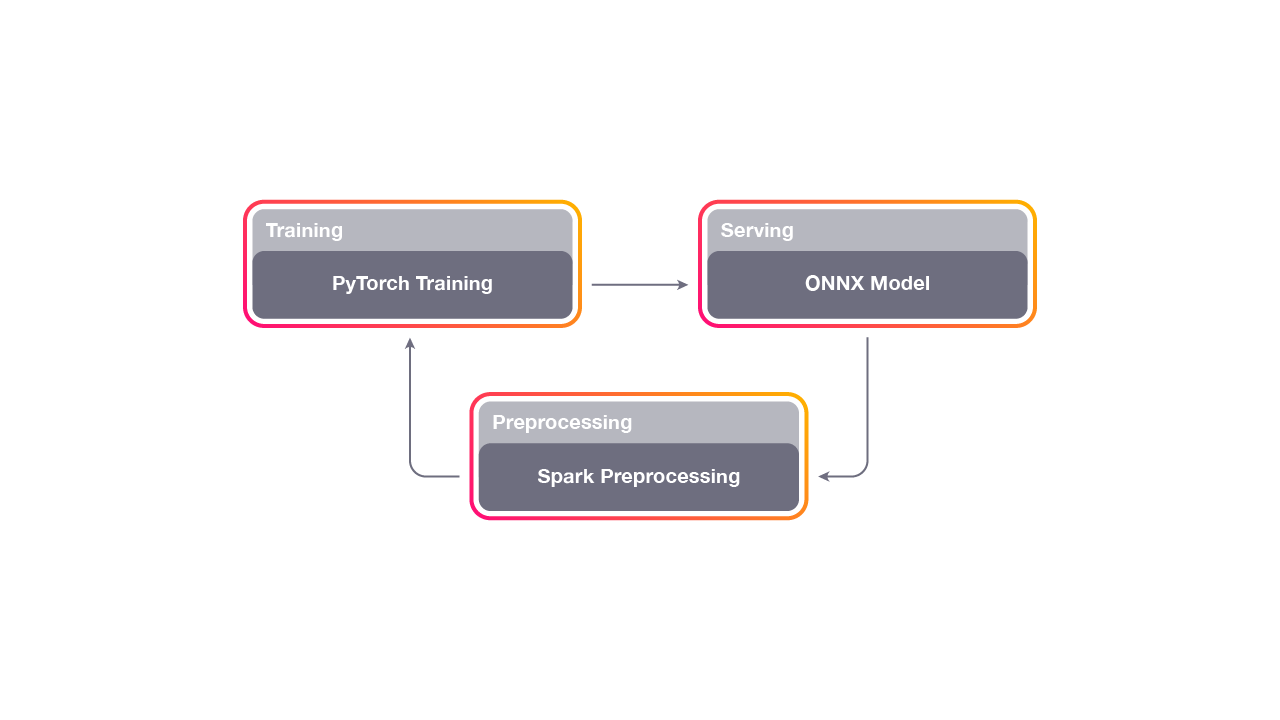
Horizon is the first open source end-to-end platform that uses applied reinforcement learning (RL) to optimize systems in large-scale production environments. The workflows and algorithms included in this release were built on open frameworks — PyTorch 1.0, Caffe2, and Spark — making Horizon accessible to anyone using RL at scale. We’ve put Horizon to work internally over the past year in a wide range of applications, including helping to personalize M suggestions, delivering more meaningful notifications, and optimizing streaming video quality.

Read More
Curiosity and Procrastination in Reinforcement Learning

Curiosity and Procrastination in Reinforcement Learning

Episodic Curiosity through Reachability: Observations are added to memory, reward is computed based on how far the current observation is from the most similar observation in memory. The agent receives more reward for seeing observations which are not yet represented in memory.

Read More