Radiology and Deep Learning

Radiology and Deep Learning

  • November 27, 2018
Table of Contents

Radiology and Deep Learning

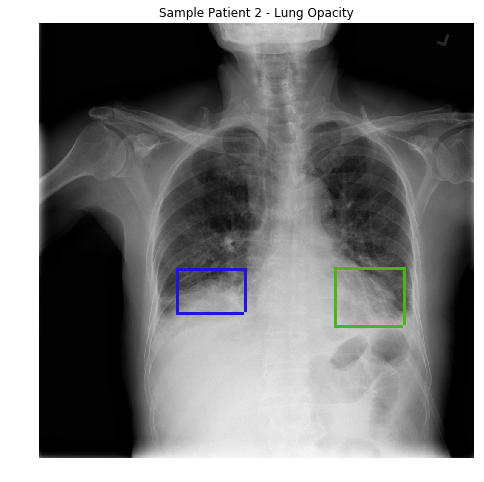
Radiology and DeepLearningDetecting pneumonia opacities from chest X-Ray images using deep learning. One day back in August, I was catching up with my best friend from high school who is now a radiology resident. One thing led to another, and we started talking about our interests in artificial intelligence and machine learning and its possible applications in radiology.

A couple of months after our talk, I stumbled upon a Kaggle challenge hosted by the Radiological Society of North American (RSNA). It was a competition that we could work on together, so I immediately called my friend. Joined by my brother, we formed a team to compete in this Kaggle challenge.

After a month of hard work, we ended up finishing in the top 3%. In this blog post, I’d like to detail what we did during the exciting month. One day back in August, I was catching up with my best friend from high school who is now a radiology resident.

One thing led to another, and we started talking about our interests in artificial intelligence and machine learning and its possible applications in radiology. A couple of months after our talk, I stumbled upon a Kaggle challenge hosted by the Radiological Society of North American (RSNA). It was a competition that we could work on together, so I immediately called my friend.

Joined by my brother, we formed a team to compete in this Kaggle challenge. After a month of hard work, we ended up finishing in the top 3%. In this blog post, I’d like to detail what we did during the exciting month.

Source: medium.com

Share :
comments powered by Disqus

Related Posts

The dark side of YouTube

The dark side of YouTube

The YouTube algorithm that I helped build in 2011 still recommends the flat earth theory by the hundreds of millions. This investigation by @RawStory shows some of the real-life consequences of this badly designed AI.

Read More
Predictive Scaling for EC2, Powered by Machine Learning

Predictive Scaling for EC2, Powered by Machine Learning

When I look back on the history of AWS and think about the launches that truly signify the fundamentally dynamic, on-demand nature of the cloud, two stand out in my memory: the launch of Amazon EC2 in 2006 and the concurrent launch of CloudWatch Metrics, Auto Scaling, and Elastic Load Balancing in 2009. The first launch provided access to compute power; the second made it possible to use that access to rapidly respond to changes in demand. We have added a multitude of features to all of these services since then, but as far as I am concerned they are still central and fundamental!

Read More
Five Lessons From the First Three Years of Michelangelo

Five Lessons From the First Three Years of Michelangelo

Uber has been one of the most active contributors to open source machine learning technologies in the last few years. While companies like Google or Facebook have focused their contributions in new deep learning stacks like TensorFlow, Caffe2 or PyTorch, the Uber engineering team has really focused on tools and best practices for building machine learning at scale in the real world. Technologies such as Michelangelo, Horovod, PyML, Pyro are some of examples of Uber’s contributions to the machine learning ecosystem.

Read More