The Guardian’s Migration from MongoDB to PostgreSQL on Amazon RDS

The Guardian’s Migration from MongoDB to PostgreSQL on Amazon RDS

  • January 21, 2019
Table of Contents

The Guardian’s Migration from MongoDB to PostgreSQL on Amazon RDS

The Guardian migrated their CMS’s datastore in 2018 from a self-managed MongoDB cluster to PostgreSQL on Amazon RDS for a fully managed solution. The team did an API-based migration without any downtime. Guardian’s in-house CMS – called Composer – which stores articles, blog content, photo galleries and video was originally built on top of MongoDB as a datastore.

This was preceded by a vendor software backed by an Oracle database. This setup had downtimes whenever the schema had to be migrated. As an alternative, the team looked at various NoSQL dbs, and one of the key reasons for choosing MongoDB seems to have been flexibility.

Originally hosted on their own datacenter, they moved their MongoDB to their AWS servers after an outage. The installation and management scripts had to be handwritten by Guardian’s team. They opted for a support contract and bought the OpsManager tool, which is a frontend application for managing MongoDB.

However, the team did not go for MongoDB’s Atlas offering, which is a ‘fully managed database’, for reasons which are unclear. OpsManager does not manage deployments. After moving to AWS, the team faced two MongoDB outages.

Some of them the reasons were basic system administration issues, like not allowing NTP to access time servers to keep clocks in sync. Others pertained to the difficulty of managing OpsManager itself and obtaining timely support from the vendor, according to the article. The team felt that moving to a solution which had minimal database management would suit them best.

Source: infoq.com
Share :
comments powered by Disqus

Related Posts

Crossplane lowers the barrier to a multi-cloud future

Crossplane lowers the barrier to a multi-cloud future

Cloud computing has become the dominant IT paradigm and multi-cloud looks poised to be the primary approach, with 81 percent of enterprises already adopting a multi-cloud strategy. A multi-cloud strategy prevents vendor lock-in, which is increasingly important as three major providers (AWS, GCP, and Azure) dominate the market. Despite the many benefits of a multi-cloud strategy, deploying across multiple clouds is still incredibly complex.

Read More
AWS Outperforms GCP in the 2018 Cloud Report

AWS Outperforms GCP in the 2018 Cloud Report

Customers rely on us to help navigate the complexities of the increasingly competitive cloud wars. This inspired the 2018 Cloud Computing Report, where we benchmark performance, latency, CPU, network, I/O, and cost of AWS and GCP. Note: As of December 20, 2018, we have updated two sections in this report: Network Throughput and I/O Experiment.

Read More
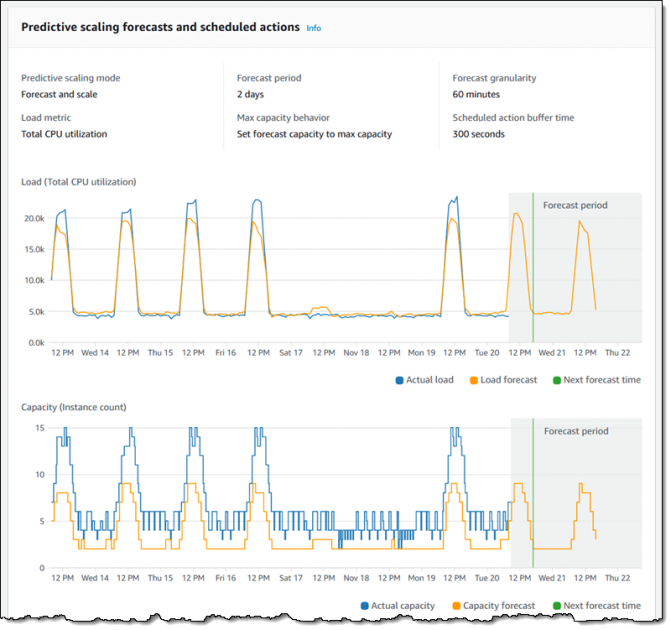
Predictive Scaling for EC2, Powered by Machine Learning

Predictive Scaling for EC2, Powered by Machine Learning

When I look back on the history of AWS and think about the launches that truly signify the fundamentally dynamic, on-demand nature of the cloud, two stand out in my memory: the launch of Amazon EC2 in 2006 and the concurrent launch of CloudWatch Metrics, Auto Scaling, and Elastic Load Balancing in 2009. The first launch provided access to compute power; the second made it possible to use that access to rapidly respond to changes in demand. We have added a multitude of features to all of these services since then, but as far as I am concerned they are still central and fundamental!

Read More