Updating Neural Networks to Recognize New Categories, with Minimal Retraining
Table of Contents
Many of today’s most popular AI systems are, at their core, classifiers. They classify inputs into different categories: this image is a picture of a dog, not a cat; this audio signal is an instance of the word “Boston”, not the word “Seattle”; this sentence is a request to play a video, not a song. But what happens if you need to add a new class to your classifier — if, say, someone releases a new type of automated household appliance that your smart-home system needs to be able to control?
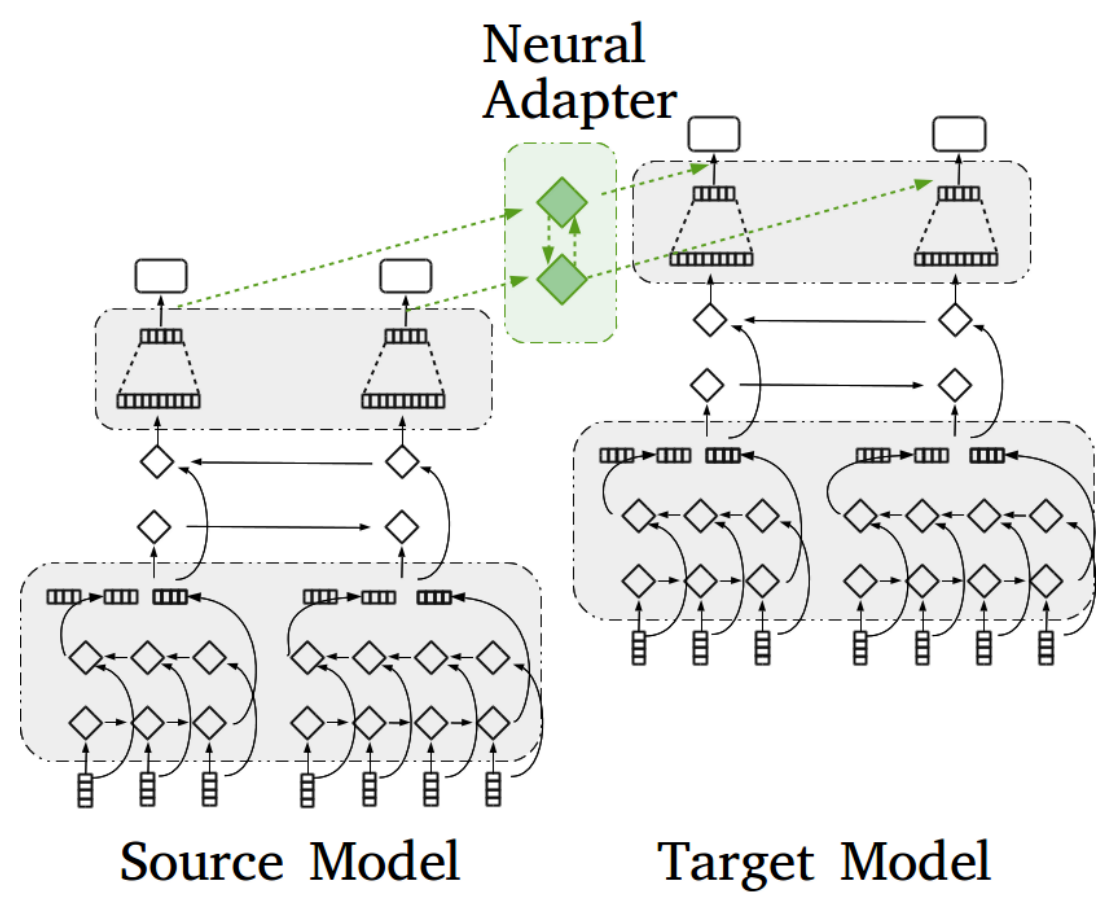
The traditional approach to updating a classifier is to acquire a lot of training data for the new class, add it to all the data used to train the classifier initially, and train a new classifier on the combined data set. With today’s commercial AI systems, many of which were trained on millions of examples, this is a laborious process. This week, at the 33rd conference of the Association for the Advancement of Artificial Intelligence (AAAI), my colleague Lingzhen Chen from the University of Trento and I are presenting a paper on techniques for updating a classifier using only training data for the new class.
As an example application, we consider a neural network that has been trained to identify people and organizations in online news articles. We show that it is possible to transfer that network and its learned parameters into a new network trained to identify an additional type of named entity — locations.
Source: amazon.com