The State of Kubernetes Configuration Management

The State of Kubernetes Configuration Management

  • February 7, 2019
Table of Contents

The State of Kubernetes Configuration Management

Configuration management is a hard, unsolved problem. We share some unique insights about the strengths and weaknesses of several popular K8s config management tools. Of all the problems we have confronted, the ones over which the most brainpower, ink, and code have been spilled are related to managing configurations.

— Brendan Burns, Brian Grant, David Oppenheimer, Eric Brewer, and John Wilkes, Google Inc. Configuration management is a hard, unsolved problem.

When we first started Argo CD, a GitOps deployment tool for Kubernetes, we knew we had to limit its scope to a deployment tool and not go anywhere near config management. We understood that since there was no perfect config management solution, Argo CD should remain agnostic to how kubernetes manifests are rendered, and let the user decide for themselves the right tool and workflow that works best for them.

Source: argoproj.io

Share :
comments powered by Disqus

Related Posts

Container Storage Interface (CSI) for Kubernetes GA

Container Storage Interface (CSI) for Kubernetes GA

The Kubernetes implementation of the Container Storage Interface (CSI) has been promoted to GA in the Kubernetes v1.13 release. Support for CSI was introduced as alpha in Kubernetes v1.9 release, and promoted to beta in the Kubernetes v1.10 release. The GA milestone indicates that Kubernetes users may depend on the feature and its API without fear of backwards incompatible changes in future causing regressions.

Read More
Server Name Indication (SNI) Support Now in Ambassador

Server Name Indication (SNI) Support Now in Ambassador

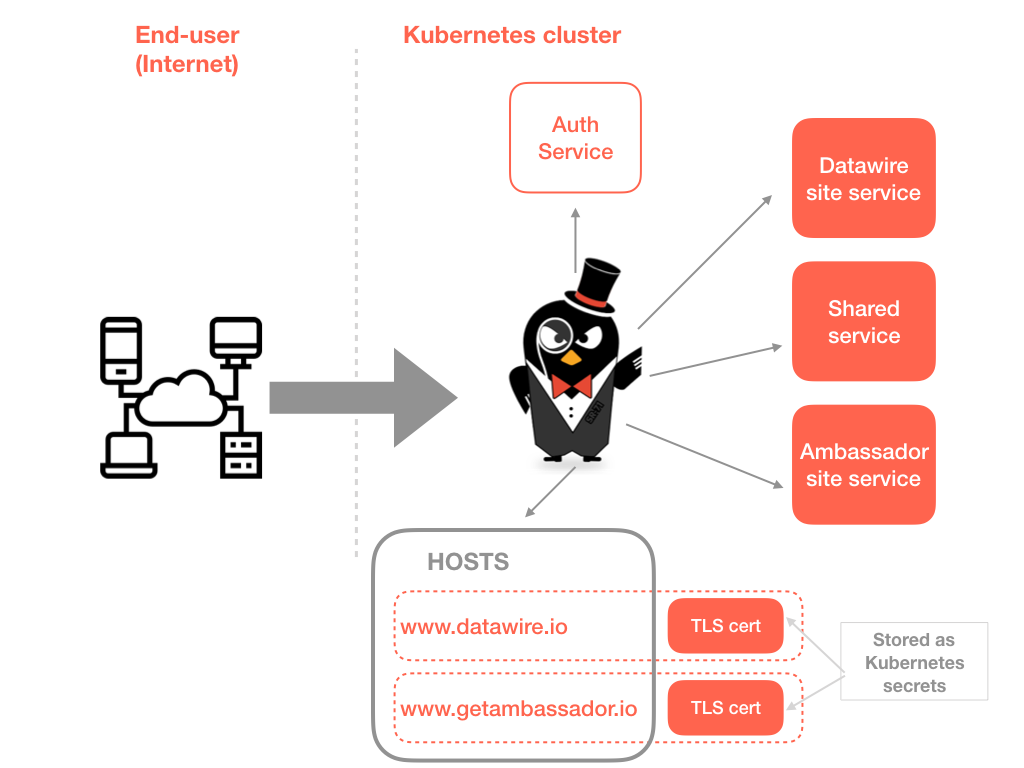
We’ve discussed many interesting use cases for SNI support within the edge proxy/gateway with both open source and commercially supported users of Ambassador. In a nutshell (and with thanks to Wikipedia), SNI is an extension to the TLS protocol which allows a client to indicate which hostname it is attempting to connect to at the start of the TCP handshaking process. This allows the server to present multiple certificates on the same IP address and TCP port number, which in turn enables the serving of multiple secure websites or API services without requiring all those sites to use the same certificate.

Read More
Sidestepping Dependency Ordering with AppSwitch

Sidestepping Dependency Ordering with AppSwitch

We are going through an interesting cycle of application decomposition and recomposition. While the microservice paradigm is driving monolithic applications to be broken into separate individual services, the service mesh approach is helping them to be connected back together into well-structured applications. As such, microservices are logically separate but not independent.

Read More