Inside Kubernetes RBAC

Inside Kubernetes RBAC

  • March 22, 2019
Table of Contents

Inside Kubernetes RBAC

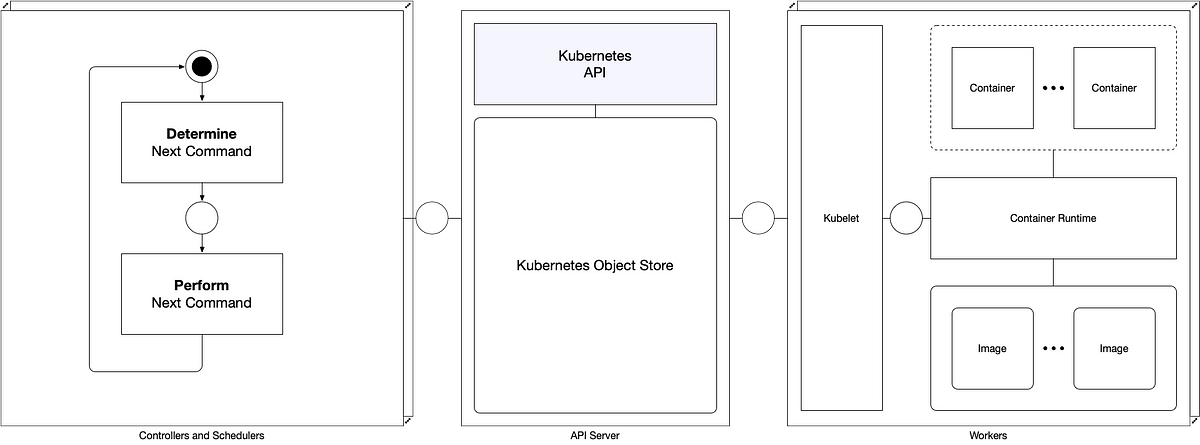
Kubernetes is a Container Orchestration Engine designed to host containerized applications on a set of nodes, commonly referred to as a cluster. Using a systems modeling approach, this series aims to advance the understanding of Kubernetes and its underlying concepts. The Kubernetes API is an Http API that provides Create/Read/Update/Delete access to query and modify the Kubernetes Object Store.

Kubernetes supports multiple authentication and authorization strategies to control the access to the API. This post provides a concise, detailed model of Kubernetes’ Role-based Access Control (RBAC), but may not be suitable as introductory material. The model is supported by partial specifications in TLA+.

Conceptually, general authorization may be modeled as a relation hasAccess between a requesting user and a requested operation.

Source: medium.com

Share :
comments powered by Disqus

Related Posts

Kubernetes at CERN: Use Cases, Integration and Challenges

Kubernetes at CERN: Use Cases, Integration and Challenges

Kubernetes at CERN: Use Cases, Integration and Challenges.

Read More
The State of Kubernetes Configuration Management

The State of Kubernetes Configuration Management

Configuration management is a hard, unsolved problem. We share some unique insights about the strengths and weaknesses of several popular K8s config management tools. Of all the problems we have confronted, the ones over which the most brainpower, ink, and code have been spilled are related to managing configurations.

Read More
Kubernetes Operations: Prioritize Workload in Overcommitted Clusters

Kubernetes Operations: Prioritize Workload in Overcommitted Clusters

One of the benefits in adopting a system like Kubernetes is facilitating burst-able and scalable workload. Horizontal application scaling involves adding or removing instances of an application to match demand. Kubernetes Horizontal Pod Autoscaler enables automated pod scaling based on demand.

Read More