How to run OpenWhisk Actions on Knative?

How to run OpenWhisk Actions on Knative?

  • May 4, 2019
Table of Contents

How to run OpenWhisk Actions on Knative?

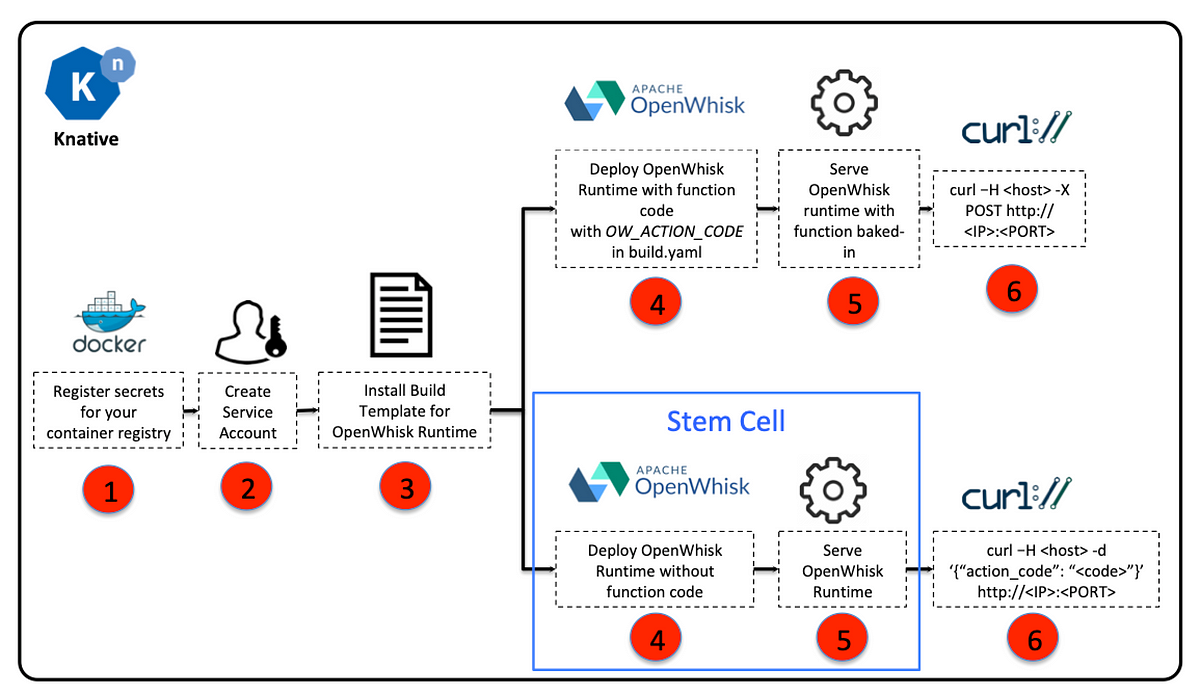
It’s now time to show case what it takes to run an existing OpenWhisk action on Knative. Matt Rutkowski and I are very excited to share our process of building and serving OpenWhisk actions on Knative here. We started prototyping OpenWhisk NodeJS Runtime with a hello world action.

Later, extended the runtime to handle more complex use cases such as: It’s a six step process, first three steps are one time deployment per Knative installation. The whole build and serve process is based on Knative Source-to-URL workflow. Knative needs access to your container registry in order to push locally built container image.

I am using Docker Hub here but you can use any registry of your choice by changing the registry name under annotation.

Source: medium.com

Share :
comments powered by Disqus

Related Posts

Knative: bringing serverless to Kubernetes everywhere

Knative: bringing serverless to Kubernetes everywhere

Knative, the open-source framework that provides serverless building blocks for Kubernetes, is on a roll, and GKE serverless add-on, the first commercial Knative offering that we announced this summer, is enjoying strong uptake with our customers. Today, we are announcing that we’ve updated GKE serverless add-on to support Knative 0.2. In addition, today at KubeCon, RedHat, IBM, and SAP announced their own commercial offerings based on Knative.

Read More
Knative and Solo.io Gloo

Knative and Solo.io Gloo

Knative is talked about a great deal, especially around how its capabilities can help provide more standard building blocks on top of Kubernetes for building microservices and serverless like services, e.g., scale to zero, and scale on demand. Knative high level has three capability areas: building, serving, and eventing. This post will provide some examples around Knative Build and Knative Serving with Solo.io Gloo.

Read More