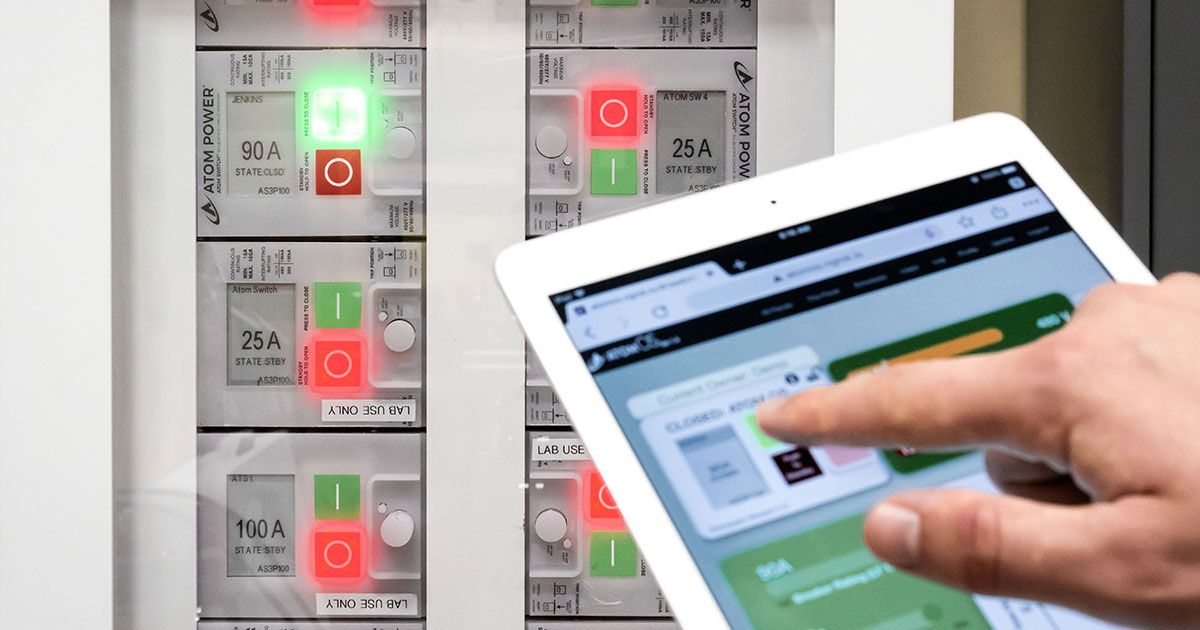
Atom Power Is Launching the Era of Digital Circuit Breakers
Table of Contents
Circuit breakers have been mechanical switches for 140 years. Now Atom Power is launching the first UL safety-certified digital circuit breaker panel combined with smart software and connectivity that could help monitor and control energy use of buildings remotely. In the dark, dank depths of your home basement hangs a drab gray box that guards the building’s electrical circuits.
The circuit breakers inside switch off current flow when there is risk of an overload or short circuit, keeping you safe from fires or electrocution. It’s a critical job, and one that breakers have been doing with a fairly simple, 140-year-old electromechanical technology. But circuit breakers are about to get a digital overhaul.
New semiconductor breakers that combine computing power and wireless connectivity could become the hub of smart, energy-efficient buildings of the future. Digital circuit breakers have been a holy grail in power engineering circles. Atom Power has now become the first to earn certification from the Underwriters Laboratory(UL) for its product, which combines breakers based on silicon carbide transistors with software.
While UL approval isn’t legally required, it’s the industry safety standard for commercial use.
Source: ieee.org