How AI is Starting to Influence Wireless Communications

How AI is Starting to Influence Wireless Communications

  • June 8, 2019
Table of Contents

How AI is Starting to Influence Wireless Communications

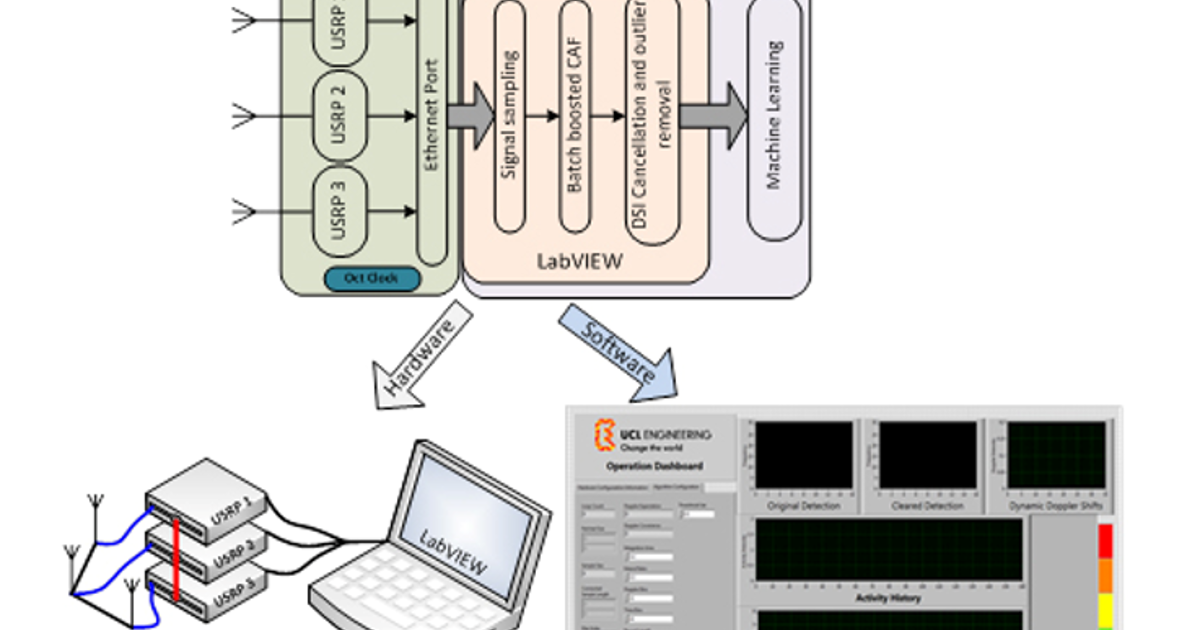
Machine learning and deep learning technologies are promising an end-to-end optimization of wireless networks while they commoditize PHY and signal-processing designs and help overcome RF complexities What happens when artificial intelligence (AI) technology arrives on wireless channels? For a start, AI promises to address the design complexity of radio frequency (RF) systems by employing powerful machine learning algorithms and significantly improving RF parameters such as channel bandwidth, antenna sensitivity and spectrum monitoring. So far, engineering efforts have been made for smartening individual components in wireless networks via technologies like cognitive radio.

However, these piecemeal optimizations targeted at applications such as spectrum monitoring have been labor intensive, and they entail efforts to hand-engineer feature extraction and selection that often take months to design and deploy. On the other hand, AI manifestations like machine learning and deep learning can invoke data analysis to train radio signal types in a few hours. For instance, a trained deep neural network takes a few milliseconds to perform signal detection and classification as compared to traditional methodologies based on the iterative and algorithmic signal search and signal detection and classification.

Source: ieee.org
Tags :
Share :
comments powered by Disqus

Related Posts

Releasing Pythia for vision and language multimodal AI models

Releasing Pythia for vision and language multimodal AI models

Pythia is a deep learning framework that supports multitasking in the vision and language domain. Built on our open-source PyTorch framework, the modular, plug-and-play design enables researchers to quickly build, reproduce, and benchmark AI models. Pythia is designed for vision and language tasks, such as answering questions related to visual data and automatically generating image captions.

Read More
12 open source tools for natural language processing

12 open source tools for natural language processing

It would be easy to argue that Natural Language Toolkit (NLTK) is the most full-featured tool of the ones I surveyed. It implements pretty much any component of NLP you would need, like classification, tokenization, stemming, tagging, parsing, and semantic reasoning. And there’s often more than one implementation for each, so you can choose theexact algorithm or methodology you’d like to use.

Read More
Detecting malaria with deep learning

Detecting malaria with deep learning

Artificial intelligence (AI) and open source tools, technologies, and frameworks are a powerful combination for improving society. ‘Health is wealth’ is perhaps a cliche, yet it’s very accurate! In this article, we will examine how AI can be leveraged for detecting the deadly disease malaria with a low-cost, effective, and accurate open source deep learning solution.

Read More