Layer 7 Observability with Consul Service Mesh
Table of Contents
Observability comes from the world of engineering and control theory. Control theory states that observability is itself a measure that describes “how well internal states of a system can be inferred from knowledge of external outputs”. In contrast to monitoring which is something you do, observability, is a property of a system.
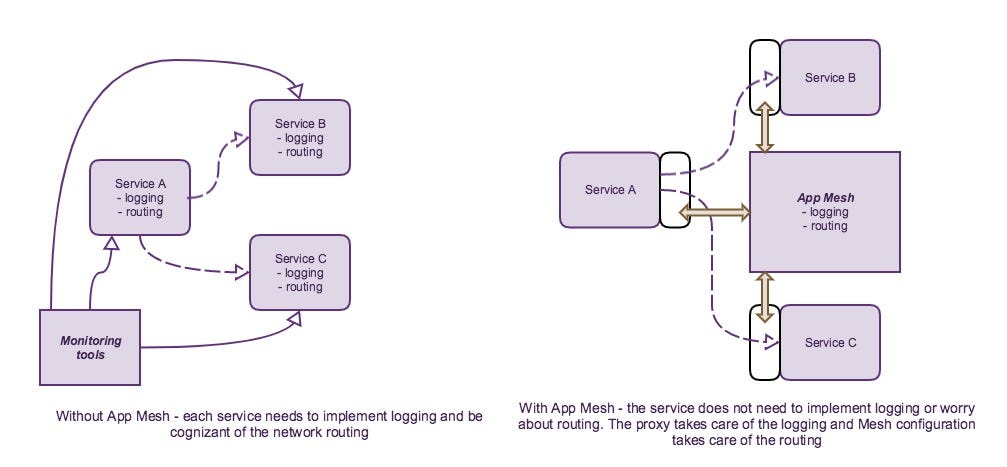
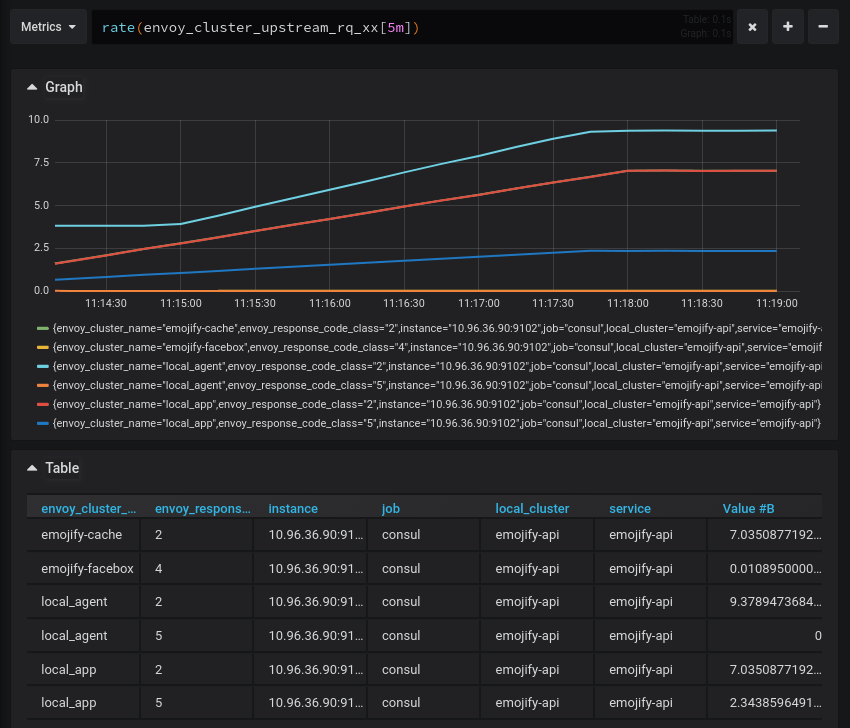
A system is observable if the external outputs, logging, metrics, tracing, health-checks, etc, allow you to understand its internal state. Observability is especially important for modern, distributed applications with frequent releases. Compared to a monolithic architecture where components communicate through in-process calls, microservice architectures have more failures during service interactions because these calls happen over potentially unreliable networks.
And with it becoming increasingly difficult to create realistic production-like environments for testing, it becomes more important to detect issues in production before customers do. A view into those service calls helps teams detect failures early, track them and engineer for resiliency.
Source: hashicorp.com