Velero is an Open Source Tool to Back up and Migrate Kubernetes Clusters

Velero is an Open Source Tool to Back up and Migrate Kubernetes Clusters

  • June 8, 2019
Table of Contents

Velero is an Open Source Tool to Back up and Migrate Kubernetes Clusters

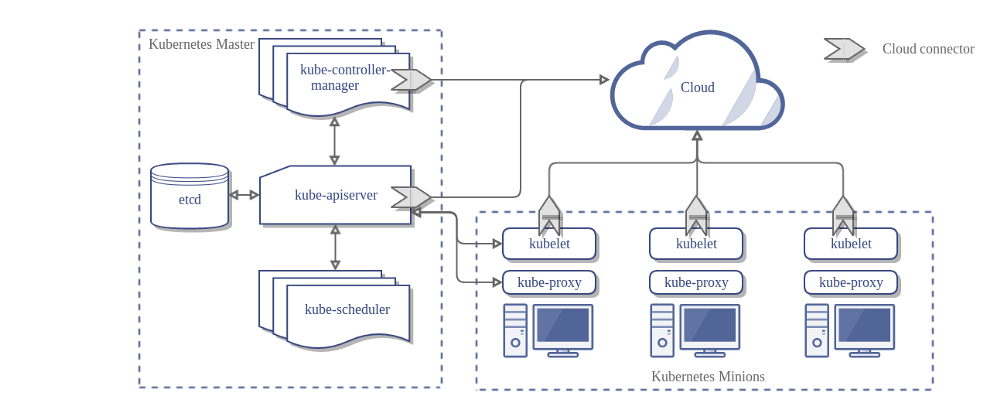
Backups can capture subsets of the cluster’s resources, filtering by namespace, resource type, and/or label selector, providing a high degree of flexibility around what’s backed up and restored. Users of managed Kubernetes offerings often do not have access to the underlying etcd database, so direct backups/restores of it are not possible. Resources exposed through aggregated API servers can easily be backed up and restored even if they’re stored in a separate etcd database.

Backups can capture subsets of the cluster’s resources, filtering by namespace, resource type, and/or label selector, providing a high degree of flexibility around what’s backed up and restored. Users of managed Kubernetes offerings often do not have access to the underlying etcd database, so direct backups/restores of it are not possible.

Source: velero.io
Share :
comments powered by Disqus

Related Posts

Setting up Kubernetes Network Policies

Setting up Kubernetes Network Policies

The container orchestrator war is over, and Kubernetes has won. With companies large and small rapidly adopting the platform, security has emerged as an important concern — partly because of the learning curve inherent in understanding any new infrastructure, and partly because of recently announced vulnerabilities. Kubernetes brings another security dynamic to the table — its defaults are geared towards making it easy for users to get up and running quickly, as well as being backward compatible with earlier releases of Kubernetes that lacked important security features.

Read More
Pod Priority and Preemption in Kubernetes

Pod Priority and Preemption in Kubernetes

Kubernetes is well-known for running scalable workloads. It scales your workloads based on their resource usage. When a workload is scaled up, more instances of the application get created.

Read More