Whats new in Kubernetes 1.15?
Table of Contents
Another outstanding Kubernetes release, this time focused on making the CustomResource a first class citizen in your cluster, allowing for better extensibility and maintainability. But wait, there is much more! Here is the full list of what’s new in Kubernetes 1.15.
NodeLocal DNSCache improves Cluster DNS performance by running a dns caching agent on cluster nodes as a Daemonset, thereby avoiding iptables DNAT rules and connection tracking. The local caching agent will query kube-dns service for cache misses of cluster hostnames (cluster.local suffix by default). This effort has two main goals – reduce performance impact that Events have on the rest of the cluster and add more structure to the Event object which is the first and necessary step to make it possible to automate event analysis.
Mutating and validating admission webhooks are becoming more and more mainstream for projects extending the Kubernetes API. Until now mutating webhooks were only called once, in alphabetical order. In Kubernetes 1.15 this will change, allowing webhook re-invocation if another webhook later in the chain modifies the same object.
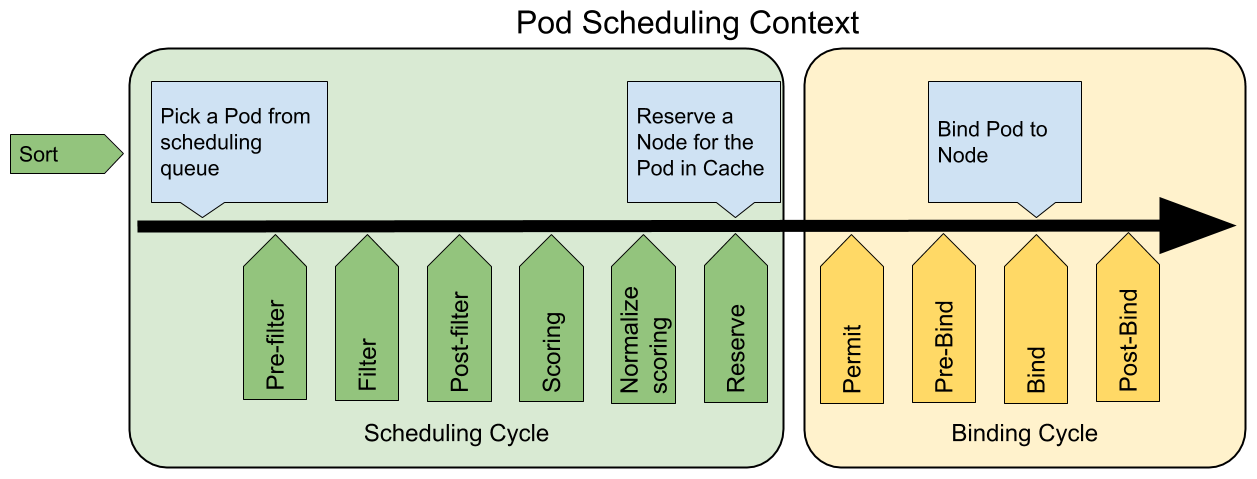
If you enable this feature, it is important to verify that any admission webhook you implement is idempotent. In other words, it can be executed multiple times over the same object without lateral effects like adding the same attribute several times. This feature covers a new pluggable architecture for the Kubernetes 1.15 Scheduler that makes scheduler customizations easier to implement.
It adds a new set of “plugin” APIs and entry points to the existing scheduler.
Source: sysdig.com