Amenity Detection and Beyond—New Frontiers of Computer Vision at Airbnb

Amenity Detection and Beyond—New Frontiers of Computer Vision at Airbnb

  • August 3, 2019
Table of Contents

Amenity Detection and Beyond—New Frontiers of Computer Vision at Airbnb

In 2018, we published a blog post titled Categorizing Listing Photos at Airbnb. In that post, we introduced an image classification model which categorized listing photos into different room types and helped organize hundreds of millions of listing photos on the Airbnb platform. Since then, the technology has been powering a wide range of internal content moderation tools, as well as some consumer-facing features on the Airbnb website.

We hope such an image classification technology makes our business more efficient, and our products more pleasant to use. Image Classification is a sub-field of a broader technology called Computer Vision, which deals with how computer algorithms can be made to gain understandings of digital images or videos. Another related sub-field is Object Detection, which deals with detecting instances of semantic objects of a certain class in digital images or videos.

Airbnb has millions of listings worldwide. To make sure our listings uphold high standards of quality, we need to determine whether the amenities advertised online match the actual ones. At our scale, using only human efforts to do so is obviously neither economical nor sustainable.

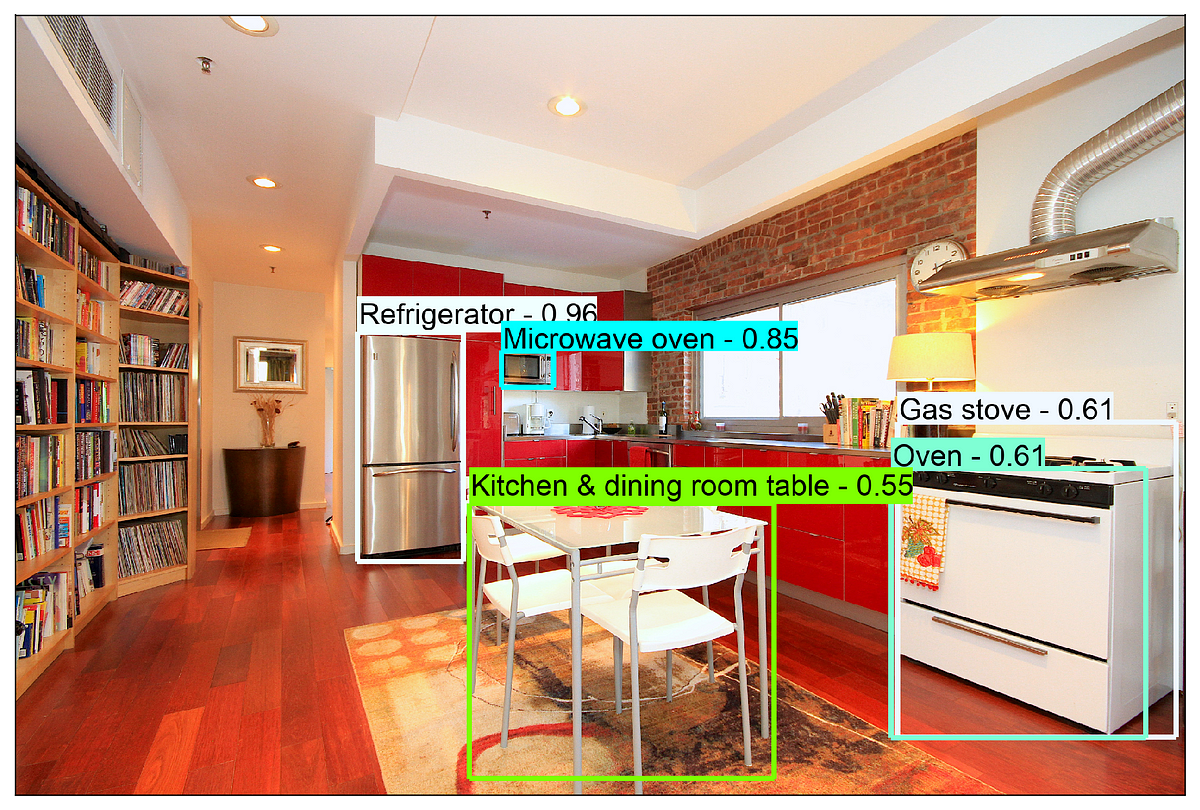
Object Detection technologies, however, can lend us a helping hand, as amenities can be automatically detected in listing photos. Furthermore, the technology opens a new door to a home sharing platform where listing photos are searchable by amenities, which helps our guests navigate through listings much more easily.

Source: medium.com

Tags :
Share :
comments powered by Disqus

Related Posts

How to run evolution strategies on Google Kubernetes Engine

How to run evolution strategies on Google Kubernetes Engine

Reinforcement learning (RL) has become popular in the machine learning community as more and more people have seen its amazing performance in games, chess and robotics. In previous blog posts we’ve shown you how to run RL algorithms on AI Platform utilizing both Google’s powerful computing infrastructure and intelligently managed training service such as Bayesian hyperparameter optimization. In this blog, we introduce Evolution Strategies (ES) and show how to run ES algorithms on Google Kubernetes Engine (GKE).

Read More
Detecting malaria with deep learning

Detecting malaria with deep learning

Artificial intelligence (AI) and open source tools, technologies, and frameworks are a powerful combination for improving society. ‘Health is wealth’ is perhaps a cliche, yet it’s very accurate! In this article, we will examine how AI can be leveraged for detecting the deadly disease malaria with a low-cost, effective, and accurate open source deep learning solution.

Read More
How AI is Starting to Influence Wireless Communications

How AI is Starting to Influence Wireless Communications

Machine learning and deep learning technologies are promising an end-to-end optimization of wireless networks while they commoditize PHY and signal-processing designs and help overcome RF complexities What happens when artificial intelligence (AI) technology arrives on wireless channels? For a start, AI promises to address the design complexity of radio frequency (RF) systems by employing powerful machine learning algorithms and significantly improving RF parameters such as channel bandwidth, antenna sensitivity and spectrum monitoring. So far, engineering efforts have been made for smartening individual components in wireless networks via technologies like cognitive radio.

Read More