How Lyft Creates Hyper-Accurate Maps from Open-Source Maps and Real-Time Data

How Lyft Creates Hyper-Accurate Maps from Open-Source Maps and Real-Time Data

  • September 8, 2019
Table of Contents

How Lyft Creates Hyper-Accurate Maps from Open-Source Maps and Real-Time Data

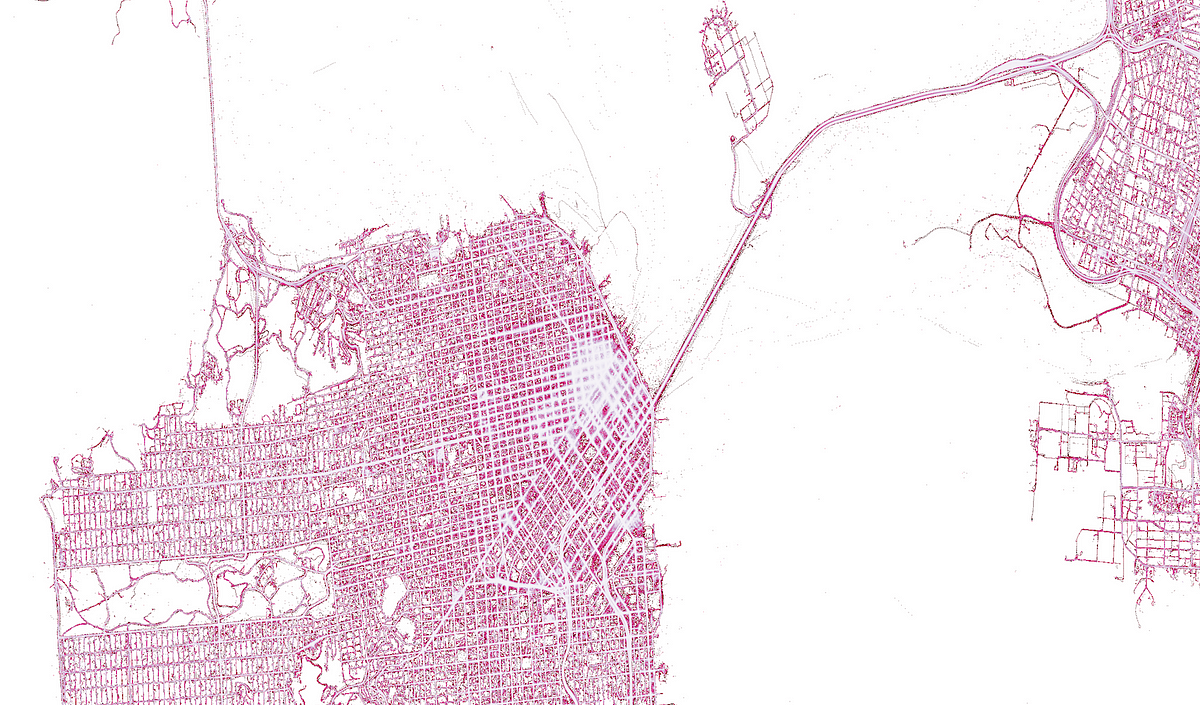
At Lyft, our novel driver localization algorithm detects map errors to create a hyper-accurate map from OpenStreetMap (OSM) and real-time data. We have fixed thousands of map errors in OSM in bustling urban areas. Later in the post, we share a sample of the detected map errors in Minneapolis with the OSM Community to improve the quality of the map.

Why are maps important for Lyft? Lyft’s mission to build the world’s best transportation relies on its inherent geospatial capabilities. For example, driver and passenger geolocations must be precisely known in order to efficiently pair drivers and passengers.

We also need precise knowledge of the road network to compute efficient routes and accurate estimated time of arrival from current driver position to pick-up point, and from pick-up point to drop-off point. Moreover, meticulous understanding of the road network is crucial to correctly compute the distance travelled by the drivers.

Source: lyft.com

Share :
comments powered by Disqus

Related Posts

Remote-controlled Salmon Farms to Operate Off Norway by 2020

Remote-controlled Salmon Farms to Operate Off Norway by 2020

Tucked within Norway’s fjord-riddled coast, nearly 3,500 fish pens corral upwards of 400 million salmon and trout. Not only does the country raise and ship more salmonoid overseas than any other in the world (1.1 million tons in 2018), farmed salmon is Norway’s third largest export behind crude petroleum and natural gas. In a global industry expected to quintuple by 2050, farmed salmon is a fine kettle of fish.

Read More
Re-Architecting the Video Gatekeeper

Re-Architecting the Video Gatekeeper

This is the story about how the Content Setup Engineering team used Hollow, a Netflix OSS technology, to re-architect and simplify an essential component in our content pipeline — delivering a large amount of business value in the process. Each movie and show on the Netflix service is carefully curated to ensure an optimal viewing experience. The team responsible for this curation is Title Operations.

Read More
Supercharging Data Delivery: The New League Patcher

Supercharging Data Delivery: The New League Patcher

For the past 8 years, League has been using a patching system called RADS (Riot Application Distribution System) to deliver updates. RADS is a custom patching solution based on binary deltas that we built with League in mind. While RADS has served us well, we felt we had an opportunity to improve some key areas of the patching experience.

Read More