How Lyft Creates Hyper-Accurate Maps from Open-Source Maps and Real-Time Data

How Lyft Creates Hyper-Accurate Maps from Open-Source Maps and Real-Time Data

  • September 8, 2019
Table of Contents

How Lyft Creates Hyper-Accurate Maps from Open-Source Maps and Real-Time Data

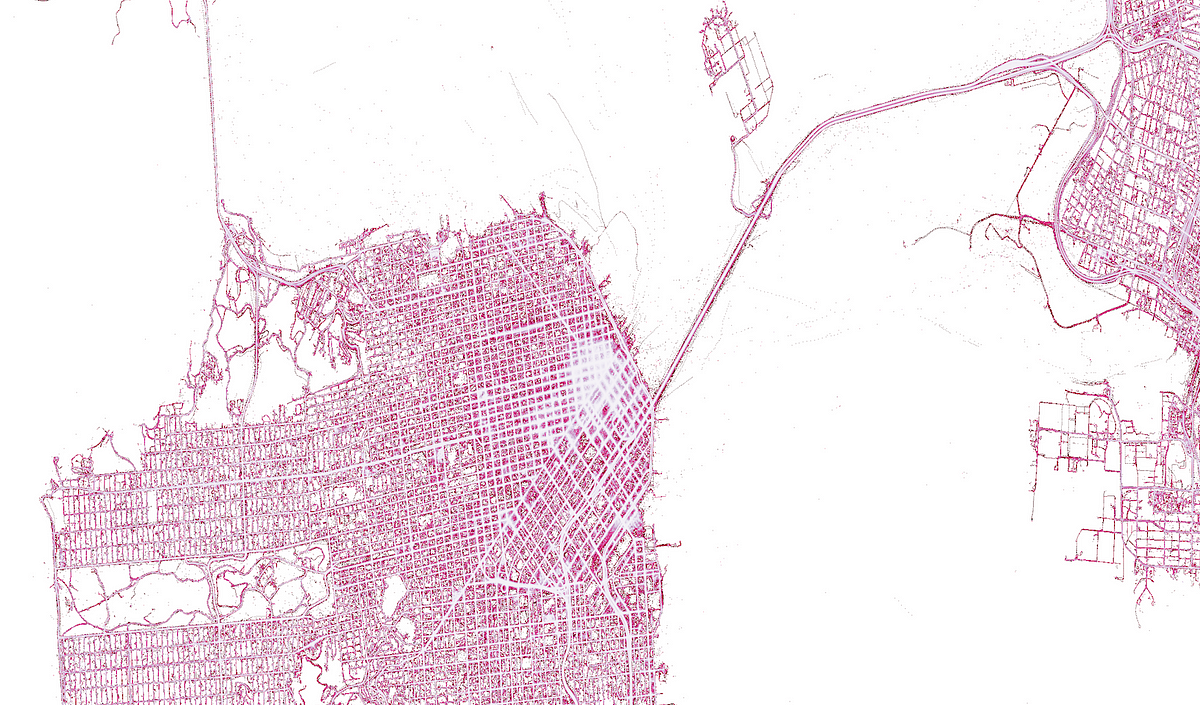
At Lyft, our novel driver localization algorithm detects map errors to create a hyper-accurate map from OpenStreetMap (OSM) and real-time data. We have fixed thousands of map errors in OSM in bustling urban areas. Later in the post, we share a sample of the detected map errors in Minneapolis with the OSM Community to improve the quality of the map.

Why are maps important for Lyft? Lyft’s mission to build the world’s best transportation relies on its inherent geospatial capabilities. For example, driver and passenger geolocations must be precisely known in order to efficiently pair drivers and passengers.

We also need precise knowledge of the road network to compute efficient routes and accurate estimated time of arrival from current driver position to pick-up point, and from pick-up point to drop-off point. Moreover, meticulous understanding of the road network is crucial to correctly compute the distance travelled by the drivers.

Source: lyft.com

Share :
comments powered by Disqus

Related Posts

Evolution of Netflix Conductor

Evolution of Netflix Conductor

Conductor is a workflow orchestration engine developed and open-sourced by Netflix. If you’re new to Conductor, this earlier blogpost and the documentation should help you get started and acclimatized to Conductor. In the last two years since inception, Conductor has seen wide adoption and is instrumental in running numerous core workflows at Netflix.

Read More
Remote-controlled Salmon Farms to Operate Off Norway by 2020

Remote-controlled Salmon Farms to Operate Off Norway by 2020

Tucked within Norway’s fjord-riddled coast, nearly 3,500 fish pens corral upwards of 400 million salmon and trout. Not only does the country raise and ship more salmonoid overseas than any other in the world (1.1 million tons in 2018), farmed salmon is Norway’s third largest export behind crude petroleum and natural gas. In a global industry expected to quintuple by 2050, farmed salmon is a fine kettle of fish.

Read More
First the E-Bike, Next the Flying Car

First the E-Bike, Next the Flying Car

Carbon fiber composites areincredibly strong for their weight; that’s why they’re key to the newest aircraft designs. However, they’re only strong in one direction, so they’re generally layered or woven in grid patterns before being shaped into structures. That means one set of fibers carries the load some of the time, and another set carries it atother times—which is not the most efficient use of the material.

Read More