This $30 Device Turns the Cold of Outer Space Into Renewable Energy

This $30 Device Turns the Cold of Outer Space Into Renewable Energy

  • September 14, 2019
Table of Contents

This $30 Device Turns the Cold of Outer Space Into Renewable Energy

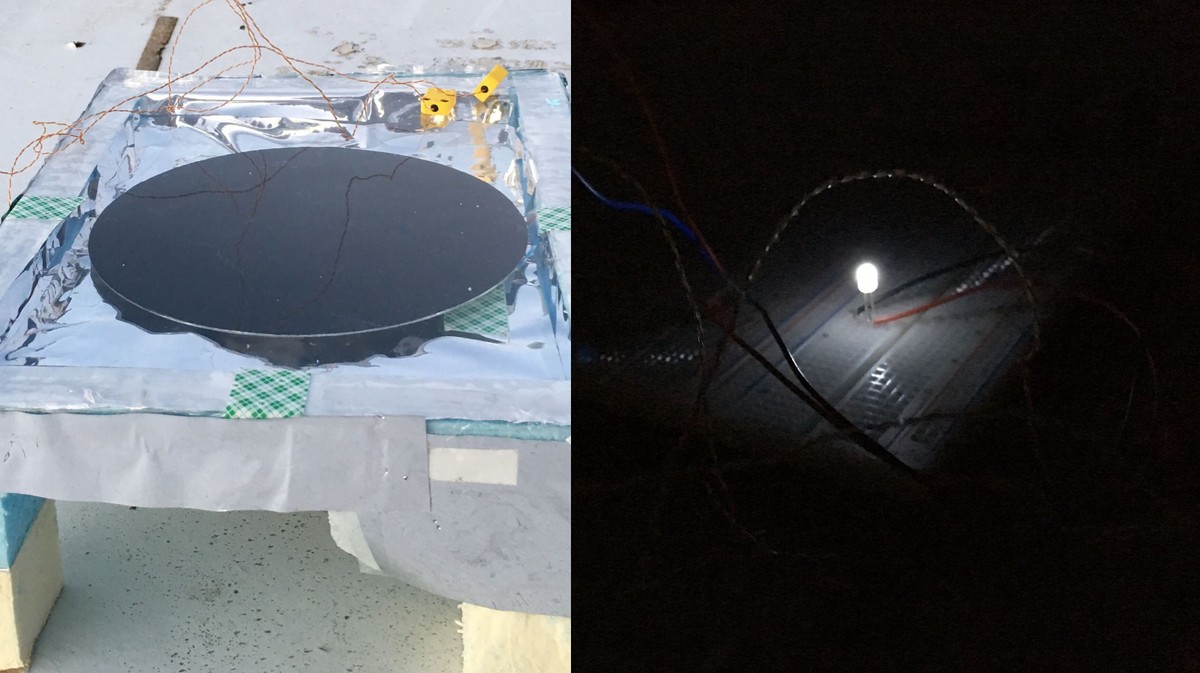
The sun can be a powerful source of renewable energy, but so can the night sky. Now, a team of scientists have created a device that turns the cold of space into enough electricity to power an LED light. As described in a paper published on Thursday in the journal Joule, the device is based off of a thermoelectric generator that creates electricity from the difference in temperature between a ‘hot side’ and a ‘cold side.’

The researchers—UCLA scientist Aaswath Raman, and Stanford scientists Wei Li and Shanhui Fan—decided to take this idea one step further and use the ambient environment of Earth as a heat source and the cold of outer space as one gigantic cold sink. The prototype consists of four stilts supporting two plates sandwiched between a thermoelectric generator. One plate is aimed at the ground, the other at the sky.

The downward-facing plate draws heat from the air around it, while the upward-facing plate is paired with an aluminum disk painted black. The disk acts as an emitter that radiates heat into space through Earth’s atmosphere, cooling the plate to below ambient temperature.

Source: vice.com

Tags :
Share :
comments powered by Disqus

Related Posts

UBC breakthrough opens door to $100 ultrasound machine

UBC breakthrough opens door to $100 ultrasound machine

Engineers at the University of British Columbia have developed a new ultrasound transducer, or probe, that could dramatically lower the cost of ultrasound scanners to as little as $100. Their patent-pending innovation—no bigger than a Band-Aid—is portable, wearable and can be powered by a smartphone. Conventional ultrasound scanners use piezoelectric crystals to create images of the inside of the body and send them to a computer to create sonograms.

Read More
The Calculator That Helped Land Men on the Moon

The Calculator That Helped Land Men on the Moon

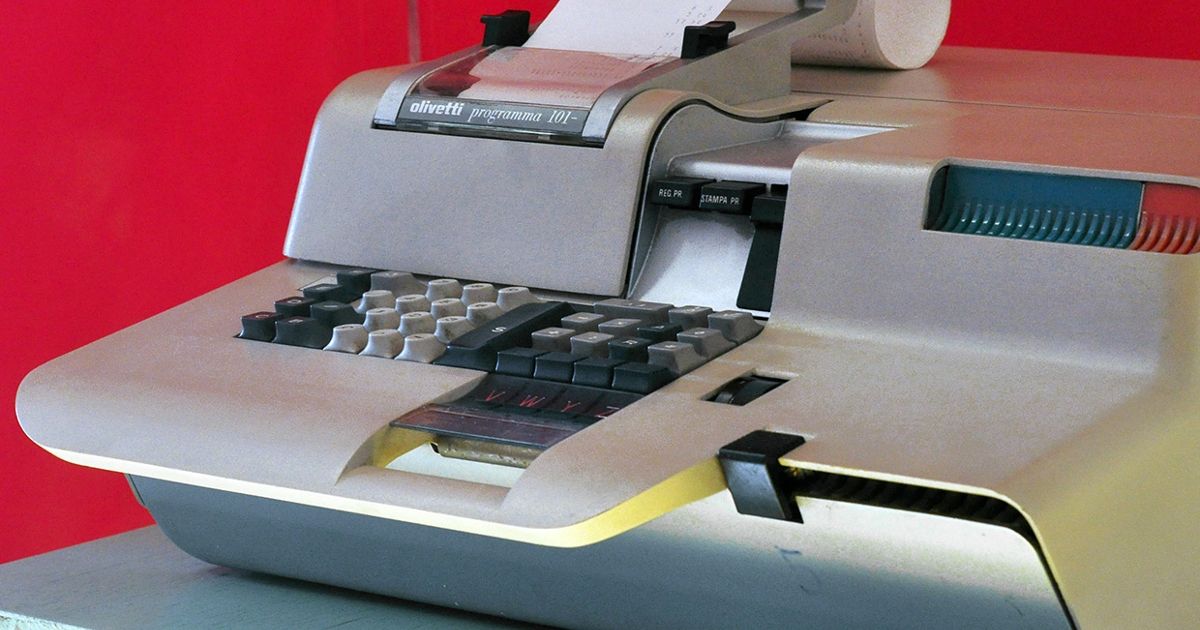
Introduced at a Business Equipment Manufacturers Association show in New York in October 1965, this programmable desktop calculator provedan immediate success. Also known as the P101 or the Perottina (after the chief engineer who designed it, Pier Giorgio Perotto), it eventually sold more than 40,000 units, primarily in the United States but also in Europe. NASA bought a number of P101s, which were used by engineers working on the 1969 Apollo11 moon landing.

Read More