Amazon Releases Container Monitoring for Amazon ECS, EKS, and Kubernetes via CloudWatch

Amazon Releases Container Monitoring for Amazon ECS, EKS, and Kubernetes via CloudWatch

  • October 5, 2019
Table of Contents

Amazon Releases Container Monitoring for Amazon ECS, EKS, and Kubernetes via CloudWatch

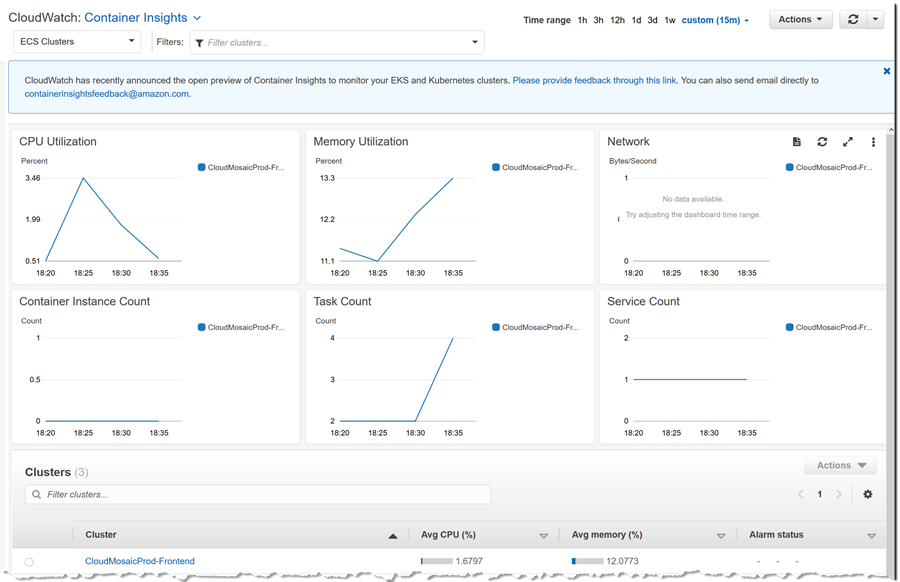
Recently, Amazon announced that customers can now monitor, isolate, and diagnose their containerized applications and microservices environments using Amazon CloudWatch Container Insights. Cloud Insights is a part of Amazon CloudWatch, a fully-managed monitoring and observability service in AWS targeted for DevOps engineers, developers, site reliability engineers (SREs), and IT managers.

Source: infoq.com

Tags :
Share :
comments powered by Disqus

Related Posts

Key Conjurer: Our Policy of Least Privilege

Key Conjurer: Our Policy of Least Privilege

Hi, my name is Reza Nikoopour and I’m a security engineer on the Security team at Riot. My team is responsible for securing Riot infrastructure wherever we’re deployed – whether that means internal or external data centers or clouds. We provide cloud security guidance to the rest of Riot, and we’re responsible for Key Conjurer, our open source AWS API programmatic access solution.

Read More
Architecting for PCI DSS Segmentation and Scoping on AWS

Architecting for PCI DSS Segmentation and Scoping on AWS

AWS has published a whitepaper, Architecting for PCI DSS Scoping and Segmentation on AWS, to provide guidance on how to properly define the scope of your Payment Card Industry (PCI) Data Security Standard (DSS) workloads running on the AWS Cloud. The whitepaper looks at how to define segmentation boundaries between your in-scope and out-of-scope resources using cloud native AWS services. The whitepaper is intended for engineers and solution builders, but it also serves as a guide for Qualified Security Assessors (QSAs) and internal security assessors (ISAs) to better understand the different segmentation controls available within AWS products and services, along with associated scoping considerations.

Read More