Making the LinkedIn experimentation engine 20x faster

Making the LinkedIn experimentation engine 20x faster

  • January 23, 2020
Table of Contents

Making the LinkedIn experimentation engine 20x faster

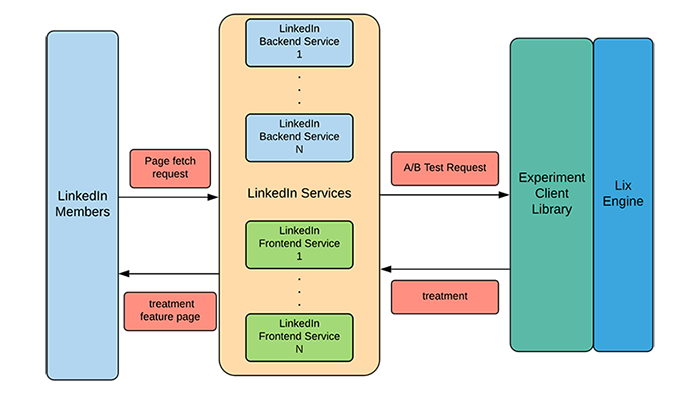
At LinkedIn, we like to say that experimentation is in our blood because no production release at the company happens without experimentation; by “experimentation,” we typically mean “A/B testing.” The company relies on employees to make decisions by analyzing data. Experimentation is a data-driven foundation of the decision-making process, which helps with measuring the precise impact of every change and release, and evaluating whether expectations meet reality.

LinkedIn’s experimentation platform operates at an extremely large scale: It serves up to 800,000 QPS of network calls, It serves about 35,000 concurrently running A/B experiments, It handles up to 23 trillion experiment evaluations per day, Average latency of experiment evaluation is 700 ns and the 99th percentile is 3 μs, It is used in about 500 production services. It is used in about 500 production services.

Source: linkedin.com

Share :
comments powered by Disqus

Related Posts

Kubernetes Failure Stories

Kubernetes Failure Stories

I started to compile a list of public failure/horror stories related to Kubernetes. It should make it easier for people tasked with operations to find outage reports to learn from. Since we started with Kubernetes at Zalando in 2016, we collected many internal postmortems.

Read More
Stack Overflow: How We Do Monitoring

Stack Overflow: How We Do Monitoring

What is monitoring? As far as I can tell, it means different things to different people. But we more or less agree on the concept.

Read More
The Biggest IT Failures of 2018

The Biggest IT Failures of 2018

This year provedonce againthat IT-related failures “are universally unprejudiced: they happen in every country; to large companies and small; in commercial, nonprofit, and governmental organizations; and without regard to status or reputation.” Below is a review that just scratches the surface of the sundry failures, glitches, and other IT hiccups that made the news in 2018. This year saw a slight reduction in the number of flight cancellations and delays due to computer-related problems as compared with the past three years, especially in the United States.

Read More